How much does a granny flat cost in Melbourne?
Getting a straight answer on granny flat costs in Melbourne is harder than it should be. What you will actually pay depends on construction type, what sits outside the quoted price, and what your specific site allows.
Apr 2, 2026 | Rhys Davies
Table of contents
- What a granny flat costs by construction type
- Breaking down the full cost
- Do you need a planning permit for a granny flat in Victoria?
- Granny Flat sizes and how they affect your budget
- Can you rent out a granny flat in Victoria?
- Does a granny flat add value to your property?
- How to finance a granny flat build
- What to ask before you commit to anything
If you’ve been trying to find a straight answer to what a granny flat actually costs in Victoria, you’ve probably already noticed that most guides are either frustratingly vague or written by builders trying to get you to call them before you’ve done any research. We’d rather just tell you what we know.
The honest answer is that granny flat costs in Melbourne range from around $80,000 for a basic prefab or modular structure through to $250,000 or more for a fully custom-built, architect-designed secondary dwelling. That’s a wide range, and the reason it’s that wide is because “granny flat” covers a lot of ground. A single-room studio at the back of a Tarneit block is a very different project from a two-bedroom self-contained home behind a house in Yarraville. Size, site conditions, construction type, and whether you need a planning permit all move the number significantly.
What a granny flat costs by construction type
The single biggest factor in your granny flat price is how it’s built. You’re essentially choosing between three approaches, and each one has a different cost structure, timeline, and set of trade-offs.
Modular and prefab granny flats
These sit at the lower end of the market, typically between $80,000 and $140,000 supply and install. These are structures built off-site and delivered as a finished or near-finished product. The appeal is speed and predictability, you know what you’re getting before the crane arrives. The limitation is flexibility. You’re choosing from a manufacturer’s range, and while most will do some customisation, you’re not designing from scratch.
At our end of the market, we work with SIP (Structural Insulated Panel) construction for our modular Boxed Buildings. SIP panels are significantly better insulated than standard timber framing, which matters a lot for a structure that someone’s going to live in year-round, not just use occasionally. For an aging parent, adult child, or long-term rental the running costs and comfort difference between a SIP build and a basic kit building is worth thinking about seriously.
Transportable or kit-home granny flats
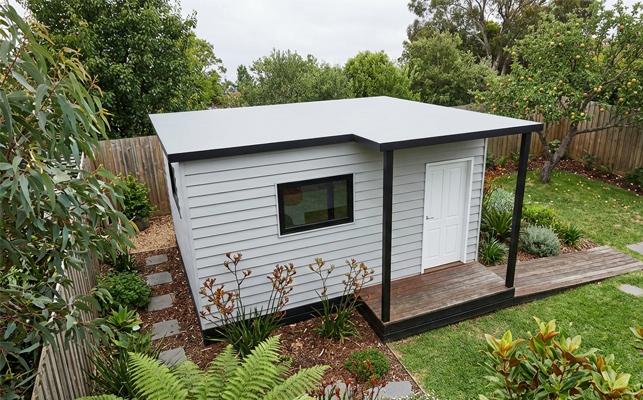
Another option, often marketed aggressively online. These can come in under $80,000 at the kit supply price, but that number rarely includes site preparation, concrete slab, connection to services, or any council-related costs. By the time you account for everything, the all-up cost is usually closer to $120,000–$150,000 for a simple single-room design.
Custom-built granny flats
Built through a traditional builder are the most flexible option and the most expensive. You’re working with a building designer or architect, getting drawings prepared, going through the permit process, and then having a builder price and construct the work. For a simple one-bedroom design, you’re realistically looking at $150,000–$200,000 all up. For a two-bedroom design with decent finishes, budget $200,000–$250,000. Some people pay more.
The case for going custom isn’t just about getting exactly what you want. On some blocks, particularly smaller or irregular ones, it’s the only way to make the project work at all. A prefab unit needs a certain site access, a certain minimum setback, and a block that doesn’t have awkward overlays or covenants in the way. If your property is complicated, a custom approach gives you more control.
Breaking down the full cost
One of the most common surprises people encounter is how much sits outside the build cost. When someone quotes you a granny flat price, it’s worth asking exactly what’s included. Here’s what typically isn’t.
Site preparation and slab work
Costs between $8,000 and $20,000 depending on the size of the structure and what’s under the ground. If you’re on reactive clay soil which is common through Melbourne’s west, you may need a more substantial slab design, and that adds cost. If the site slopes, you’re looking at cut and fill or a pier-and-beam approach, which costs more again.
Connection to services
Includes water, sewer, electricity, and potentially gas. Connecting a secondary structure to existing mains is often straightforward for a property that already has good access, but it can get expensive when you’re running new services any distance, dealing with Yarra Valley Water requirements, or upgrading an older meter. Budget $5,000–$15,000 as a rough guide, knowing that it can be higher.
Design fees
For a custom design working drawings sit between $8,000 and $18,000 depending on complexity. If you’re doing a modular build from a standard range, design fees are either included in the package or minimal.
Planning and building permits
In Victoria the cost varies. A planning permit for a granny flat, where one is required, will typically add $3,000–$8,000 in council fees plus the cost of whoever prepares your application. Building permit fees are calculated as a percentage of the construction cost usually around 1–1.5% through a private building surveyor.
Landscaping and fencing
This gets forgotten constantly. Once a structure goes in the back yard, the surrounding area usually needs work, garden reinstatement, new path access, possibly a privacy fence. This can be anywhere from $3,000 to $20,000 depending on what you want.
So if someone quotes you a modular granny flat at $100,000 all-in, and you’re on a flat, well-serviced Melbourne suburban block with no planning hurdles, that number is probably achievable. But if there are site complications or permit requirements, the real all-up cost could be $140,000–$160,000 before you’re done.
Do you need a planning permit for a granny flat in Victoria?
This is where Victoria is a bit different from states like NSW, where secondary dwellings have clearer permitted development rights on residential land. In Victoria, whether your granny flat needs a planning permit depends on your zone, any overlays on your land, and the specific requirements of your council.
In many standard residential zones in Melbourne’s western suburbs like Sunshine, Albanvale, Laverton, and Hoppers Crossing, a granny flat that meets the ResCode requirements can go through as a building permit only, which is faster and cheaper. ResCode is Victoria’s residential code that sets out setbacks, site coverage, height, and privacy requirements. If your design complies, council doesn’t get involved beyond the building permit stage.
But there are plenty of situations where a planning permit is needed. Smaller blocks under 300sqm, Heritage overlays, Significant Landscape overlays, and some council-specific requirements can all trigger the planning permit process. And some blocks, even in metropolitan Melbourne, have covenants registered on title that restrict what can be built, sometimes prohibiting secondary dwellings outright.
This is why we always recommend getting a proper site assessment done before you start designing anything. Understanding what your block allows isn’t just about whether a planning permit is needed, it’s about understanding how large the structure can be, where on the site it can sit, and whether there are any restrictions that make the project difficult or impossible without expensive workarounds.
If you’re buying a property specifically to build a granny flat on, that assessment should happen before you sign a contract, not after.
Granny flat Sizes and how they affect your budget
The relationship between size and cost isn’t perfectly linear. There are fixed costs in any build that don’t scale down just because the structure gets smaller, but size still matters a lot.
A studio or single-room design of around 30–40sqm is the entry point for a liveable granny flat. At this size you’re fitting a bed, bathroom, kitchenette, and some living space. It’s viable for a young adult, short-term accommodation, or a parent who doesn’t need much space. Build cost for a simple modular structure at this size starts around $80,000–$100,000 all up on a flat site.
A one-bedroom design at 45–60sqm is where most people end up when they want something genuinely comfortable for full-time living. You get a proper bedroom with separation from the living area, which makes a real difference for liveability. Modular options in this range sit between $110,000 and $150,000 all up. Custom builds are $160,000–$200,000.
A two-bedroom design at 60–80sqm starts to approach the size of a small apartment and works well for a couple, or a parent with visiting family. This is approaching the upper end of what most councils will permit as a secondary dwelling on standard residential land. All-up costs from $160,000 for modular to $220,000+ for custom.
In Victoria, there’s no hard legislated maximum size for a secondary dwelling the way there is in NSW (where 60sqm is the cap for exempt development). But your council’s planning scheme, the zoning, and ResCode setback requirements all effectively constrain how big you can go on a typical suburban block.
Can you rent out a granny flat in Victoria?
Yes, you can rent out a granny flat in Victoria. There’s no restriction on renting a secondary dwelling to someone who isn’t a family member, which is a question we get asked a lot because people assume the rules are the same as some other states.
From a rental income perspective, a well-located granny flat in Melbourne’s western suburbs can return $250–$400 per week depending on size, quality, and location. At $300 per week, that’s $15,600 per year before expenses. On a $150,000 all-up investment, that’s a gross yield of around 10%, which is why this is such an attractive proposition for homeowners who have the block space to work with.
The key thing to understand is that while renting is permitted, your granny flat still needs to be built to the right standard. A secondary dwelling used for rental accommodation is assessed under the same liveability standards as any other residential tenancy, adequate natural light, ventilation, ceiling height, and bathroom facilities. This isn’t something to cut corners on, both because it affects the comfort and safety of your tenant and because a building surveyor will assess it against these standards before issuing an occupancy certificate.
It’s also worth thinking about the tax implications. If you’re renting the granny flat, you can claim depreciation on the structure, interest on any financing used for construction, and a proportion of some property-related costs. A good accountant who understands property investment will be able to map this out for your situation.
Does a granny flat add value to your property?
The evidence is generally positive, though it’s not as straightforward as some granny flat builders’ marketing suggests.
The value a granny flat adds depends on whether buyers in your suburb want one. In areas where block sizes are large and demand for multi-generational living or rental income is strong, which describes much of Melbourne’s western suburbs fairly well, a granny flat that’s well-designed and properly permitted can add more to the sale price than it cost to build.
The critical qualifier is “properly permitted.” An unpermitted structure, one built without a building permit, or built in a way that doesn’t comply with what was permitted creates real problems at sale time. Buyers, or more accurately their conveyancers, will find it. It can affect financing. And it can result in the new owner being required to pull it down. A granny flat built correctly through the proper approvals process is an asset. One built to cut costs by skipping permits is a liability.
The other thing worth knowing is that a granny flat built as a separate, self-contained title (via subdivision or stratum) is a different proposition from a secondary dwelling on the same title. Separate title means separate sale, separate financing, separate rates. That’s a more complex project requiring a planning permit for subdivision, but if your block is large enough and the planning rules allow it, the development profit potential is considerably higher.
How to finance a granny flat build
Most people building a granny flat aren’t paying cash. The common financing approaches are:
Equity release or home loan top-up
If you have equity in your property, you can often borrow against it to fund the construction. The lender will want a valuation that accounts for the granny flat being built and will typically want evidence of permits. Construction loan — some lenders offer construction-specific loans that draw down in stages as construction milestones are met. This keeps interest costs lower during the build because you’re not paying interest on the full loan amount from day one.
Personal loan or granny flat-specific finance
For smaller modular or prefab builds, some homeowners fund the project with a personal loan or through financing arranged through the granny flat supplier. Interest rates are usually higher than secured lending, so it’s worth comparing properly.
Granny flat financing is an area where talking to a mortgage broker who understands construction lending is worth the time. The right structure can make a significant difference to your monthly repayments and the total cost of the loan.
What to ask before you commit to anything
Before you sign anything or pay any deposits, there are a few things worth nailing down. First, get a proper assessment of your site. Not a five-minute conversation with a salesperson — an actual review of your planning zone, any overlays on title, your covenant (if there is one), and the physical constraints of the block. This tells you what’s actually possible and what it will cost to get through the approvals process.
Second, get clarity on exactly what’s included in any quote. Supply and install versus supply only. Slab included or not. Services connections included or not. Design and permit fees included or not. A quote that looks cheap on first read often becomes much more expensive once you understand what’s not in it.
Third, think carefully about the end use. A granny flat for a parent to live in has different requirements from one you plan to rent to a stranger. Quality of insulation, soundproofing, storage, and privacy all matter more when someone’s living there full time. Getting these right at the design stage costs nothing extra. Retrofitting them later costs a lot.
We do site assessments and design work across Melbourne’s western suburbs, and the thing we see most often is people who’ve already mentally committed to a specific product or approach before they understand what their site actually allows. Getting the site assessment right at the start doesn’t just save you from making an expensive mistake, it gives you a much clearer brief to take to any supplier or builder you speak to.
A granny flat is a significant investment. The good news is that done well, it’s one that genuinely pays off whether that’s through rental income, housing a family member, or adding real value to a property you plan to sell. Getting the cost picture right from the start is how you make sure the project works the way you want it to.
Frequently Asked Questions
What are the rules for granny flats in Victoria?
Victoria doesn't have a single set of rules that applies uniformly across the state the way some other jurisdictions do. What you can build, where you can put it, and whether you need a planning permit all depends on your council's planning scheme, the zone your land sits in, and any overlays that apply to your specific title. In most standard residential zones across Melbourne, a secondary dwelling that meets ResCode requirements can proceed with a building permit alone, without needing council's planning approval. ResCode sets out the rules for setbacks, site coverage, height, and privacy that your design needs to satisfy. Where it gets more complicated is on smaller blocks, land with heritage or environmental overlays, or properties with restrictive covenants registered on title. Some councils also have local planning policies that go further than ResCode. The only way to know exactly what applies to your block is to check the planning scheme and title properly before you start designing anything.
How does a granny flat affect Centrelink payments?
This is a question that comes up often when older homeowners are looking at moving into a granny flat on their adult child's property, or allowing a family member to move onto theirs. Centrelink has a specific assessment framework for what it calls 'granny flat interests', which applies when an older person transfers assets (money or property) to someone else in exchange for a right to accommodation for life. If the arrangement meets Centrelink's definition of a granny flat interest, the transferred amount may be assessed differently from a straightforward gift, and there are deprivation rules that can apply if the amount paid is more than the property's 'reasonableness test' value. The rules here are genuinely complex and the consequences of getting them wrong can affect pension eligibility significantly. A financial adviser who works with aged care and Centrelink entitlements is the right person to talk to before any money changes hands, and ideally before any building work starts.
What size block do you need for a granny flat in Melbourne?
There's no single minimum block size that applies across all of Melbourne, but as a working guide, most standard residential blocks of 450sqm or more give you enough room to make a secondary dwelling viable without hitting too many ResCode constraints around setbacks and site coverage. Blocks under 300sqm become genuinely difficult. At that size, the setback requirements and the site coverage limits start to work against you, and there's a real chance the structure you want simply doesn't fit within what the rules allow. Site shape matters as much as size. A narrow block of 500sqm can be more limiting than a compact but well-proportioned block of 400sqm, because rear access and the relationship between the two dwellings becomes harder to manage. Slope adds another layer of complexity. A flat block is always simpler and cheaper to build on than one that requires cut and fill or elevated construction. If you're unsure what your block can support, a site assessment that looks at your specific dimensions, orientation, and planning zone will give you a clear picture before you commit to anything.
Are prefab and portable granny flats worth it in Melbourne?
Prefab and portable structures appeal for obvious reasons. The price looks lower, the timeline is shorter, and the manufacturing process is more controlled than a traditional site build. For the right site, they absolutely make sense. Where people sometimes run into trouble is in assuming that a lower kit or supply price means a lower all-up cost. Site preparation, slab work, connection to water and sewer, and any council-related costs sit on top of the supply price regardless of how the building is manufactured. A prefab unit also needs adequate access to get onto the site, and not every block in Melbourne's western suburbs has a rear lane or side passage wide enough for the delivery vehicle and crane. The other thing worth thinking about carefully is insulation performance. A lot of portable and kit structures are built to minimum standards, which means they're uncomfortable in Melbourne's temperature extremes and expensive to heat and cool year-round. If the flat will be lived in full time, a structure built with SIP panels or better-than-minimum insulation is worth the additional cost for the occupant's comfort and your energy bills.
Do you need council approval for a granny flat in Melbourne?
Since December 2023, Victoria's rules changed significantly. A granny flat under 60 square metres on a block of 300 square metres or larger no longer requires a planning permit in most residential zones, provided there are no flooding or environmental overlays on the title. This removed a major hurdle that previously made the process slower and more expensive for the majority of Melbourne homeowners. A building permit is still always required regardless of size or construction type. That's non-negotiable. A registered building surveyor issues the building permit and confirms that the design meets the Building Code of Australia and the relevant siting and amenity requirements. Where a planning permit is still needed is on blocks under 300sqm, which are assessed under Clause 54 of the planning scheme, and on land with heritage, significant landscape, or flooding overlays. Restrictive covenants on title can also prohibit secondary dwellings entirely and these exist completely independently of the planning system. The 60sqm floor area limit is also worth noting because it applies to the total footprint including all roofed areas, and it cannot be subdivided or sold separately from the main house. If your block has any of these complications, or if you're unsure, a proper title and planning check before committing to anything will save you a significant amount of time and money.
The information provided is for general information purposes only and does not constitute legal, financial, or professional advice. While care has been taken to ensure accuracy, the information may not be complete, current, or applicable to your specific situation. You should always do your own research and, where appropriate, seek advice from a qualified professional before making any decisions based on this information.
Recent Blog Posts

Tell us what you are planning
RD Building Design provides site assessments, design, and planning permit assistance for residential projects across Melbourne's western suburbs. If you're trying to work out what's possible on your block, we can help you figure that out before you spend anything.