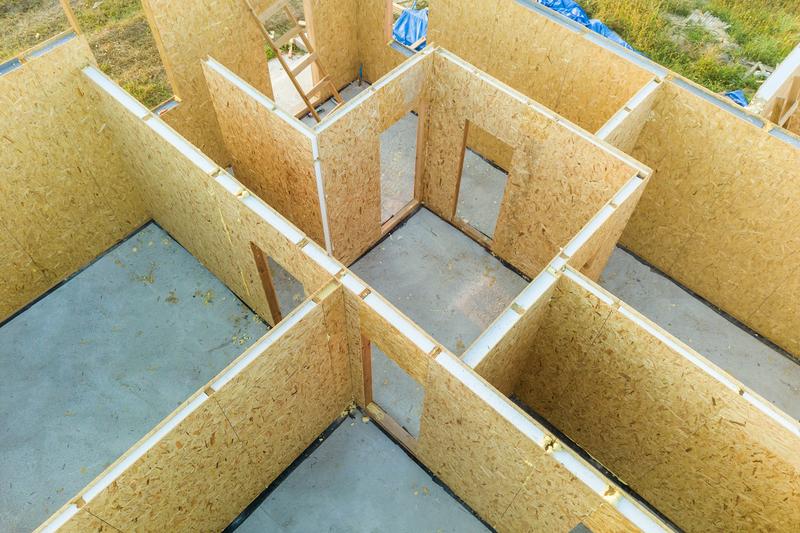
SIP panels in Australia
How Structural Insulated Panels work, where they genuinely perform well, and what the limitations are that suppliers rarely mention.
Jan 1, 2026 | Rhys Davies
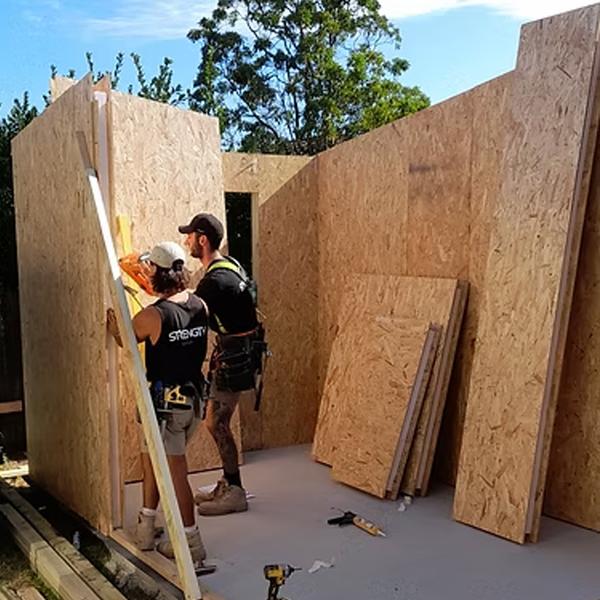
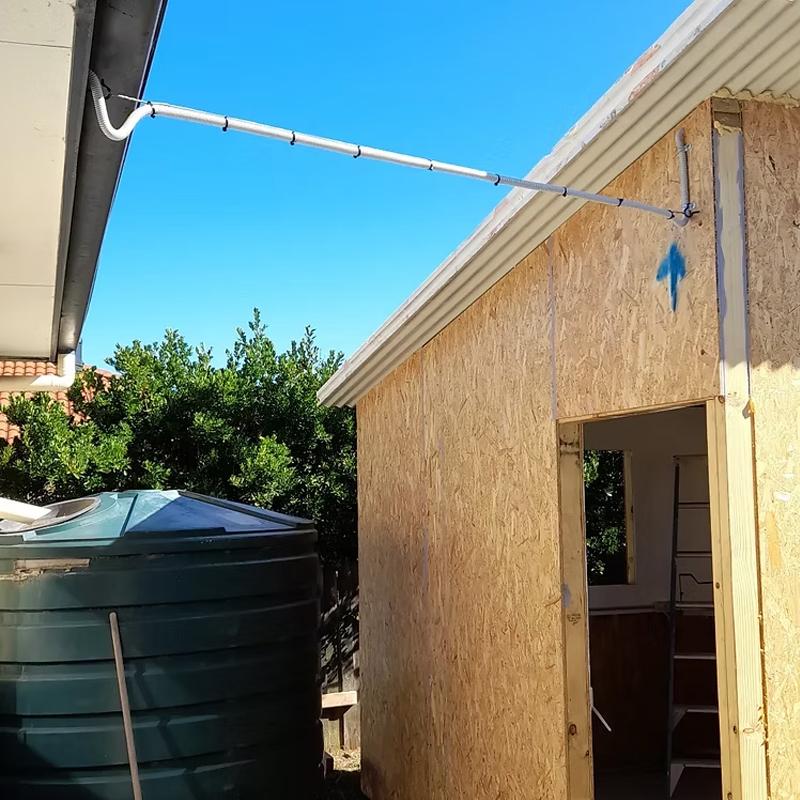
Table of contents
- What SIP panels are
- How SIP construction works
- Why thermal performance matters more than it used to
- Where SIPs make sense in Australia
- The limitations of SIP panels
- SIPs vs conventional framing
- How this connects to Boxed Buildings
Structural insulated panels have been used in residential construction in North America and Europe for decades. In Australia they are still relatively uncommon in mainstream housing, which means most people encounter them for the first time when they are mid-research on a backyard studio, granny flat, or small separate building and somebody mentions them as an option.
We use SIP construction for our Boxed Buildings range at RDBD, so this is not coming from a supplier trying to sell panels. It is coming from the design side of the process.
What SIP panels are
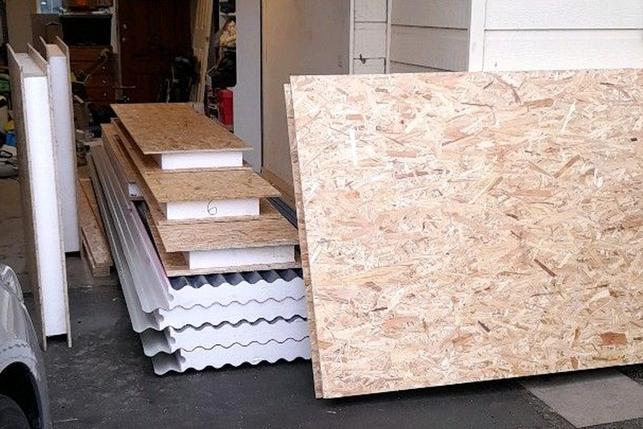
A structural insulated panel is a composite building component with a rigid foam insulation core bonded between two structural skins, typically oriented strand board (OSB) on each face. The three layers are bonded under pressure into a single load-bearing unit that functions as both the structure and the insulation in one element.
The foam core is most commonly expanded polystyrene (EPS), though polyurethane and polyisocyanurate cores are also used for higher insulation performance. The thickness of the panel, and therefore the thickness of the core, determines the thermal resistance. Panels used in residential wall construction in Australia typically range from around 100mm to 165mm total thickness.
The structural principle is similar to an I-beam. The foam core holds the two stiff skins apart, and the whole assembly resists bending, compression, and racking loads in a way that neither the skins nor the core could achieve separately. A completed SIP wall or roof panel is genuinely structural: it carries loads, not just fills gaps between a frame.
| Component | Material | Function |
|---|---|---|
| Outer skin | Oriented strand board (OSB) | Structural face, substrate for cladding or lining |
| Inner skin | Oriented strand board (OSB) | Structural face, substrate for internal lining |
| Core | EPS, polyurethane, or polyisocyanurate foam | Continuous insulation, holds skins apart to create structural depth |
| Total panel thickness | Typically 100mm to 165mm for residential walls | Determines thermal resistance (R-value) |
How SIP construction works
SIP buildings are typically designed and fabricated off-site, then assembled on a prepared slab or subfloor. Panels are cut to the dimensions of the building design, window and door openings included, at the factory. This is part of why the site assembly phase is fast compared to conventional construction.
Panels connect to each other using timber splines or structural lumber at the joints, and the whole assembly ties into a bottom plate at the floor level and a top plate at the roof or ceiling. Electrical and plumbing services run through pre-routed chases in the foam core or through the gaps at panel connections, which requires some forethought in the design phase but is not complicated once you have done it a few times.
A small building like a backyard studio, a granny flat, or a home office can be structurally assembled in a few days once the slab is ready. Finishing work, services, and fit-out still take time, but the structure going up quickly has real flow-on effects for the rest of the build.
Why thermal performance matters more than it used to
Building energy efficiency requirements in Australia have tightened significantly over the past decade, and they will keep tightening. New residential buildings now require a minimum 7-star NatHERS rating. Achieving that rating with conventional construction in Melbourne’s climate, which involves genuinely cold winters and hot summers, typically requires careful attention to insulation, air sealing, and glazing specifications.
SIP panels perform well on this front for a structural reason rather than just an insulation reason. Conventional timber or steel framed walls have a thermal bridging problem: the framing members conduct heat and cold through the wall at regular intervals, reducing the effective thermal resistance of the insulation between them. Because a SIP panel has no framing running through its cross-section, it does not have thermal bridges in the same way. The insulation value is more consistent across the whole panel face.
The other performance factor is airtightness. SIP buildings can be made considerably more airtight than conventionally framed buildings when the joints are properly detailed and sealed. In Melbourne’s climate, reducing uncontrolled air infiltration is one of the most effective ways to reduce heating and cooling loads, which translates directly to lower energy bills over the life of the building.
For backyard structures used as home offices, studios, or accommodation, thermal performance is not just a regulatory checkbox. It is the difference between a space that is genuinely comfortable year-round and one that needs a heater running constantly in winter or an air conditioner blasting in summer.
Where SIPs make sense in Australia
SIP construction genuinely suits some project types better than others. In the Australian context, the strongest fit is with backyard structures and small separate buildings. Granny flats, home offices, studios, and similar structures are where SIPs consistently make sense in the residential context. The benefits of off-site fabrication, fast assembly, and strong thermal performance apply at small scale as much as at large scale, and sometimes more so, because the project does not have the complexity of a full house to absorb any premium in panel cost.
Projects where build time matters are another strong fit. If a project has a reason to move quickly, a construction window with constraints, or a client who needs to be using the space soon, SIP construction’s faster site assembly phase is a genuine advantage.
SIPs also suit high-performance targets. If the project is aiming for passive house certification or a high NatHERS rating, SIPs are one of several construction methods that make achieving that target structurally easier. The airtightness and reduced thermal bridging help.
Compact or challenging sites benefit too. Because panels are fabricated off-site and arrive ready to assemble, there is less wet trade activity and material storage required on the site itself. For tight suburban blocks, which describes most of Melbourne’s western suburbs, this can simplify logistics considerably.
The limitations of SIP panels
SIP suppliers do not always talk about the limitations of their product as openly as the advantages.
Design changes after fabrication are expensive. Once panels are cut and delivered, altering the design is not a simple process. This makes the design and documentation phase more important, not less. You want a set of drawings that has been thoroughly reviewed before panels go into production, because changing your mind afterwards costs real money.
Moisture management needs proper detailing. If water gets into a SIP panel through a failed seal, an unsealed penetration, or a detail that traps moisture, the foam core can absorb water and the OSB faces can be affected. This is not a reason to avoid SIP construction, but it is a reason to make sure your building is designed and built by people who understand the detailing requirements. Properly designed and constructed SIP buildings do not have moisture problems; improperly detailed ones can.
Pest management requires attention. Subterranean termites are a reality in many parts of Victoria, and EPS foam is a material that termites can move through without the chemical or physical barriers that other construction methods incorporate. SIP buildings in termite-prone areas need specific management strategies: physical barriers at the base, appropriate gap detailing, and inspection access. This is solvable but needs to be part of the design from the start.
The supply chain is less mature than conventional construction. Timber framing and brickwork have deep trade experience behind them in Australia. SIP construction is less common, which means fewer builders have hands-on experience with it and fewer suppliers are producing panels locally. This is changing, but it is a practical consideration when choosing your approach.
SIPs vs conventional framing
People often want a simple cost comparison between SIP construction and conventional timber framing. The panel cost itself is typically higher than the equivalent framing and insulation materials for a conventional wall, but that is not the whole picture.
The speed of site assembly reduces labour time. The combined structure-and-insulation element reduces some of the separate trades and material handling involved in conventional construction. For small separate structures in particular, the total project cost comparison is closer than the panel-only comparison suggests.
For a backyard building on a suburban block in Melbourne, the relevant comparison is not between SIPs and conventional framing in isolation. It is between a well-designed SIP building that performs to a high thermal standard and a conventionally constructed building that achieves the same performance rating. When you are comparing like for like on performance, the cost premium for SIP construction narrows considerably.
| Factor | SIP construction | Conventional timber framing |
|---|---|---|
| Panel or framing cost | Higher | Lower |
| Site assembly speed | Faster | Slower |
| Thermal bridging | Minimal | Present at every stud |
| Airtightness potential | High | Moderate without additional measures |
| Design flexibility post-fabrication | Limited | Higher |
| Trade familiarity in Australia | Lower | High |
| Moisture risk if poorly detailed | Moderate | Lower |
| Termite management requirement | Specific strategies needed | Standard requirements |
Whether SIPs are the right choice for a specific project depends on the site, the use, the budget, the performance target, and the timeline. It is a design decision rather than a blanket recommendation.
How this connects to Boxed Buildings
The Boxed Buildings range uses SIP construction because it is the right method for what those buildings are trying to do: compact, thermally efficient, quickly assembled structures for backyard sites in Melbourne’s western suburbs. The design is developed with the panel system in mind from the start, which avoids the detailing problems that come from adapting a conventional design to SIP construction after the fact.
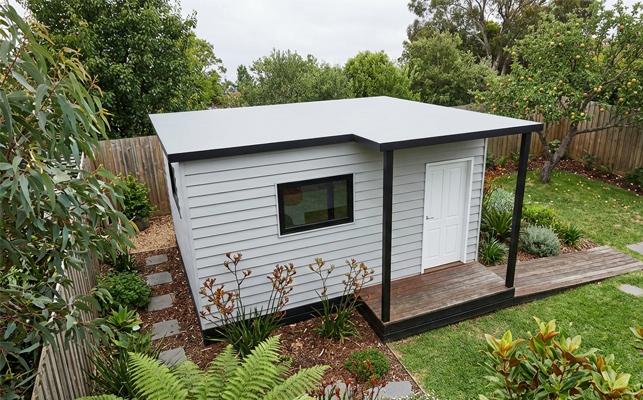
If you are looking at a backyard office, studio, granny flat, or similar structure and want to understand what a SIP-constructed building would look like for your site, the Boxed Buildings page has the range details. If you are thinking about a project that does not fit a standard design, get in touch. We design bespoke structures using the same construction method.
Frequently Asked Questions
Do SIP buildings require a building permit in Victoria, and are they treated differently from conventional construction?
No, SIP construction is not treated differently from any other method of residential construction under Victorian building regulations. A SIP-built granny flat, studio, or dwelling requires the same building permit process as a conventionally framed equivalent. Your working drawings need to comply with the National Construction Code, the building surveyor assesses them against the same standards, and mandatory inspections happen at the same construction stages. The construction method does not create a separate permit pathway or exempt you from planning requirements. If your site needs a planning permit for a secondary dwelling, a heritage overlay assessment, or any other planning scheme requirement, that applies regardless of whether the building is framed in timber, steel, or SIP panels. What changes with SIP construction is the site assembly sequence and the documentation requirements, particularly around panel fabrication drawings and services routing, not the regulatory framework.
How does the NatHERS energy rating of a SIP building compare to a conventionally framed building of the same size?
A well-designed SIP building will typically achieve a higher NatHERS rating than a comparably sized conventional timber framed building with standard batt insulation, for two structural reasons. The first is the absence of thermal bridging. In a timber framed wall, the studs conduct heat and cold through the wall at regular intervals, reducing the effective R-value of the insulation between them. A SIP panel has no framing running through its cross-section, so the insulation value is consistent across the full panel face. The second is airtightness. SIP buildings, when joints are properly detailed and sealed, can achieve air infiltration rates significantly lower than conventional construction. In Melbourne's climate, where heating loads in winter are substantial, reducing uncontrolled air infiltration has a direct and measurable effect on energy consumption. In practical terms, a SIP granny flat or studio can comfortably achieve a 8 or 9 star NatHERS rating where a conventional equivalent would require considerable additional specification work to reach 7 stars.
Can SIP panels be used for roofs as well as walls, and does RDBD use them for both?
Yes. SIP panels are manufactured for roof and floor applications as well as walls, and a fully SIP-constructed building uses panels throughout the building envelope, walls, roof, and sometimes floor, rather than only for the external walls. A SIP roof panel delivers the same continuous insulation and reduced thermal bridging benefits as a SIP wall panel, which matters particularly for ceiling heat loss in Melbourne winters and radiant heat gain in summer. The design and detailing requirements for SIP roofs are specific, particularly around ridge connections, overhangs, and the integration of roof drainage. These details are resolved in the fabrication drawings before panels are manufactured, which is one of the reasons design documentation for a SIP building needs to be more thoroughly completed before production begins than it would for a conventional framing package where some details can be resolved on site.
What happens to a SIP building if it gets wet during or after construction?
Moisture management is a genuine design consideration for SIP construction rather than a reason to avoid it. The OSB faces of a SIP panel can absorb moisture if exposed to sustained wetting, and the EPS core, while not itself water-absorbent, can allow water that has entered through a failed seal or unprotected penetration to become trapped where it then affects the OSB. The risk is managed through proper detailing rather than through material substitution. This means protecting panels from rain during site assembly, sealing all joints correctly with the manufacturer-specified tape or sealant, ensuring all penetrations for services, fixings, and connections are properly detailed and sealed, and designing the building's weather protection, cladding, flashing, and roof overhangs to prevent water entry at vulnerable points. A SIP building that is correctly designed and constructed by people familiar with the system does not have moisture problems in practice. The issues that appear in cautionary accounts of SIP construction almost always trace back to inadequate detailing or panels being left unprotected on site.
Are SIP buildings suitable for all locations in Victoria, including bushfire-prone areas?
SIP construction can be specified and engineered for bushfire-prone land, but the suitability depends on the specific Bushfire Attack Level rating required for the site and the product being used. Standard EPS-cored SIP panels are not inherently fire-resistant in the way that masonry or non-combustible cladding systems are, so a SIP building in a bushfire management overlay area needs to be assessed against the BAL requirements for that site and specified accordingly. This may involve non-combustible cladding over the panel exterior, fire-rated window and door systems, and other BAL-specific construction requirements that apply to any building method on that land. If you are considering a SIP-constructed building on land with a bushfire overlay, confirming the BAL rating with a building surveyor before design begins is the right starting point, and the SIP supplier or manufacturer needs to confirm that their product and the proposed specification meets the required standard. Not every SIP product available in Australia has been tested or rated for use in higher BAL categories.
The information provided is for general information purposes only and does not constitute legal, financial, or professional advice. While care has been taken to ensure accuracy, the information may not be complete, current, or applicable to your specific situation. You should always do your own research and, where appropriate, seek advice from a qualified professional before making any decisions based on this information.
Recent Blog Posts

Tell us what you are planning
RDBD designs and delivers Boxed Buildings using SIP construction for backyard sites across Melbourne's western suburbs. If you are looking at a studio, granny flat, or small separate structure and want to understand what a SIP-built option would look like for your site, get in touch.