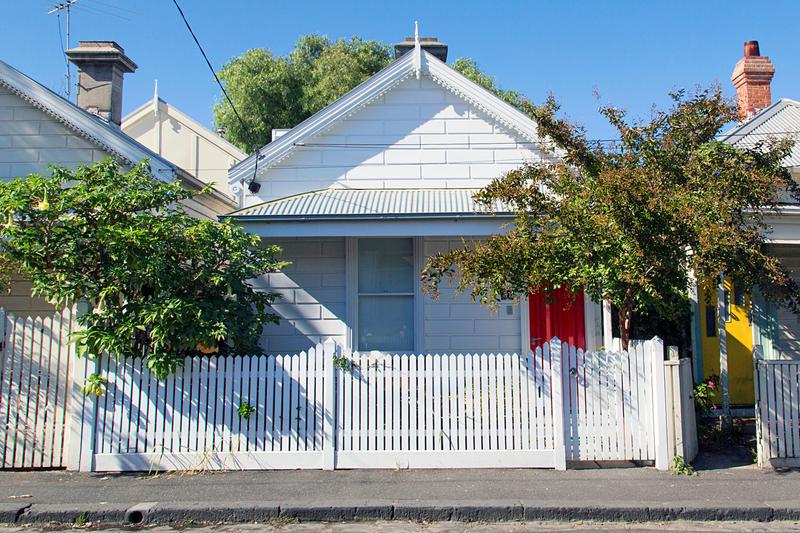
Small block and narrow lot design solutions for Melbourne homeowners
What's actually possible on a tight lot depends on your zone, your setbacks, and whether the design was conceived around your block from the start.
Jan 10, 2026 | Rhys Davies
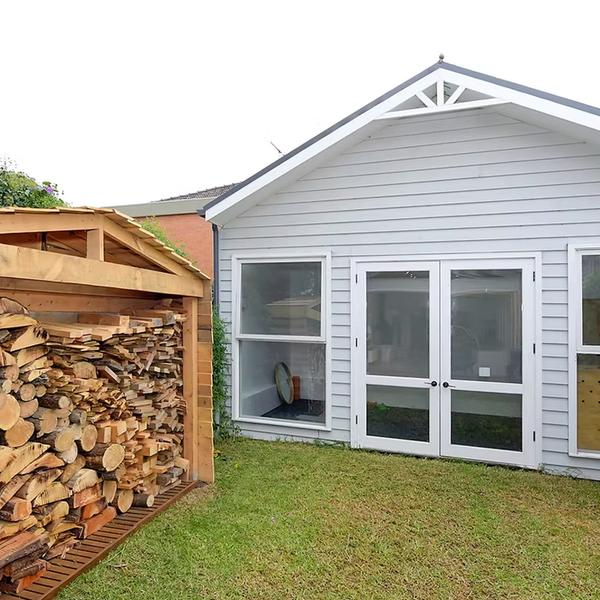
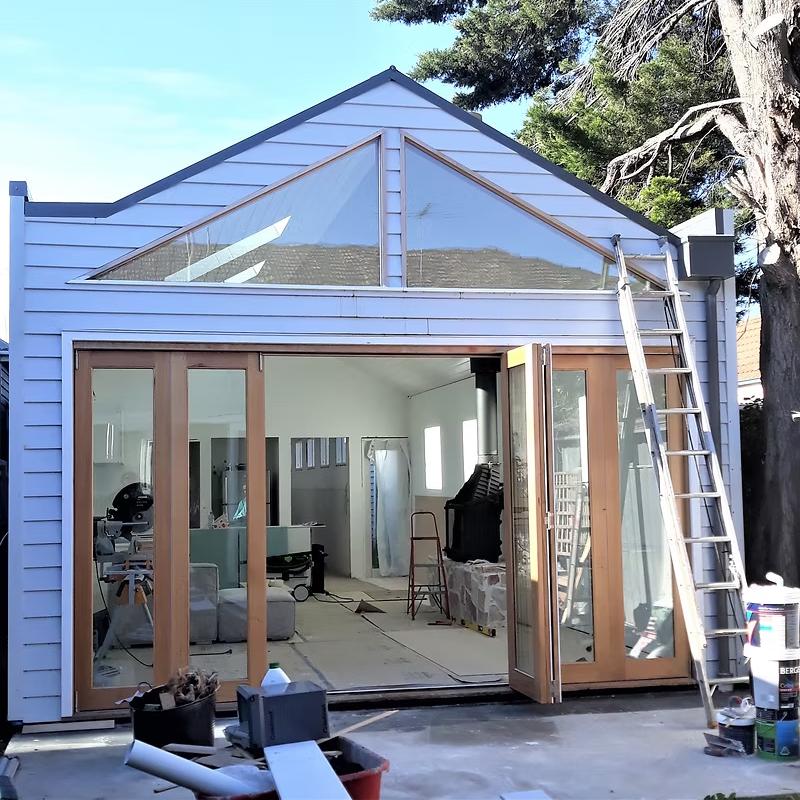
Table of contents
- What counts as a small or narrow block in Melbourne?
- The rules that shape everything
- The volume builder problem on small and narrow blocks
- Small blocks and granny flats. Can you fit both?
- Second storey additions on small Melbourne blocks
- Orientation and small blocks
- Starting with your site
Small blocks and narrow lots come with a specific kind of frustration. You know there’s more potential in the site than you’re currently using, but every time you start looking at options like volume builder catalogues, online house plan libraries, even conversations with builders, you hit the same wall. The designs don’t fit. The footprints are too wide. The rooms are arranged for blocks that are nothing like yours. And nobody seems particularly interested in solving the actual problem.
This is where custom building design earns its place. Narrow lot homes in Melbourne are not a niche edge case anymore. Medium-density infill, subdivision of older quarter-acre blocks, and the general trend toward smaller lot sizes through Melbourne’s growth corridors means that a lot of people in the western suburbs are working with sites that are anywhere from 8 to 14 metres wide, often with irregular shapes, lane access, or challenging orientation. Getting the design right on these sites isn’t harder than getting it right on a generous rectangular block. It just requires different thinking from the start.
What counts as a small or narrow block in Melbourne?
There’s no single definition, but as a practical guide: a narrow block is generally one where the street frontage is under 10–12 metres. Anything under 9 metres starts to create real design constraints — not insurmountable ones, but ones that need to be thought through carefully from the beginning. A small block is less about width and more about total area. Blocks under 400sqm in Melbourne’s residential zones start to limit what you can build in terms of site coverage and setbacks, and under 300sqm your options narrow considerably.
Melbourne’s western suburbs have a lot of both. The older housing stock through areas like Footscray, Sunshine, and Yarraville was often built on tight inner-suburban blocks, sometimes as narrow as 7.5 metres. The original Victorian or Edwardian house takes up a substantial proportion of the available area. Further out in areas like Tarneit, Hoppers Crossing, and Wyndham Vale, medium-density housing estates have produced a wave of newer blocks in the 300–450sqm range that are technically larger but often constrained by side setback requirements that leave a narrower usable footprint than they appear on paper.
Understanding your specific block is the starting point for everything else. The size and frontage are only part of the picture, zoning, any overlays, title covenants, orientation, and where the existing services enter the site, all affect what’s realistic.
The rules that shape everything
ResCode is Victoria’s residential code, and it’s the framework that governs setbacks, site coverage, building height, overlooking, overshadowing, and a handful of other requirements for residential development. You don’t have to memorise it, but understanding the basics helps you have more useful conversations with anyone you’re working with.
Setbacks
Setbacks are the minimum distances between the building and the site boundaries. For a typical suburban block in Melbourne, the front setback is generally determined by averaging the neighbouring houses. Side setbacks are calculated based on wall height. At ground level a 1.0–1.2 metre side setback is common, and this increases as the wall gets higher. If both neighbours are sitting at or near the side boundary, your usable width gets squeezed down quickly.
On a 10-metre-wide block, once you account for side setbacks on both sides, you might have 7.5–8 metres of usable building width. On an 8-metre block, you could be working with 5.5–6 metres. That’s not a lot when you’re trying to fit a functional floor plan, but it’s achievable with the right design approach.
Site coverage
The proportion of the block covered by the building footprint is capped at 60% for most residential zones in Victoria. On a 300sqm block, that’s 180sqm of footprint. On a 400sqm block, 240sqm. These numbers sound generous until you factor in a required car space, some garden area, and the setbacks that are eating into your total site area from multiple sides.
Overlooking rules under ResCode are the ones that catch people out most often on small blocks. If a habitable room window or balcony is within 9 metres of a neighbouring property boundary at a height of more than 0.8 metres above natural ground level, you may need to limit sightlines through window placement, screening, or offsetting the window from the boundary. On a narrow site, windows that look sideways toward neighbours need careful handling.
Overshadowing rules
Overshadowing rules protect a neighbour’s solar access to the northern part of their garden. On a narrow block where you’re contemplating a second storey, this needs to be tested early, particularly if your neighbour’s garden is to your south.
None of this is a reason to give up on a small block. But it is a reason why downloading a volume builder’s standard plan and assuming it’ll work on your site is usually a recipe for disappointment.
Design strategies that actually work on narrow and small sites
There are a handful of approaches that come up again and again in small block design, because they solve problems that are structurally similar across different sites.
Going vertical
On a small footprint, the most direct way to get more floor area is to add a second storey. A double storey narrow lot design gets you twice the floor area for roughly the same footprint, which means you preserve garden space and don’t max out your site coverage. The constraints are the overshadowing analysis and the staircase, which takes up more proportional space on a narrow plan than it does on a wide one. Where you put the stairs in a narrow house matters more than most people realise. A poorly positioned staircase can eat into two or three rooms across both levels.
Rear extension on an existing house
For older homes in Melbourne’s inner west, the most common brief we get is extending toward the rear of the site, connecting a kitchen and living area to the backyard and getting some of the light and space that the original floor plan never delivered. On a small block, the challenge is doing this without wiping out all the garden space or creating a living area so deep from front to back that natural light doesn’t reach the middle. A rear extension with a well-designed rooflight, or a raked ceiling that brings in northern light over a lower neighbouring structure, can make a significant difference to how the space feels.
Courtyard planning
Folding the building around a small courtyard is a technique borrowed from Mediterranean and Asian residential traditions that works extremely well on tight Australian suburban sites. Instead of treating the garden as what’s left over after the building fills the site, a courtyard design makes an outdoor room part of the spatial sequence from the beginning. This solves the deep-plan light problem and creates a genuinely pleasant private outdoor space on a site where a conventional backyard might be too small to feel useful.
Maximising the rear boundary
In older Melbourne suburbs, a lot of small blocks have rear lane access, a legacy of horse-and-cart waste collection that was common in inner urban areas. A rear lane means you can often locate garage or car accommodation at the back of the site, which frees up the footprint of the main house from needing to dedicate street frontage to a garage door. It also opens up the front of the block for living space and a better connection to the street. This is consistently underused by people who inherit a rear-lane site and default to a standard front-garage layout.
Smart internal planning
On a narrow floor plan, rooms that are long and shallow tend to work better than rooms that are square. A kitchen that runs lengthways down the building is more functional on a 6-metre-wide plan than one that sits square in the middle of the floor plate. Similarly, combining spaces,, open-plan kitchen and living, or an ensuite that’s also accessible from the hallway as a second bathroom reduces the proportion of the floor area dedicated to circulation without making the spaces feel cramped.
The volume builder problem on small and narrow blocks
Volume builders have a place in the market. On a standard rectangular block of 400sqm or more, a catalogue design from a high-volume builder can be a fast and cost-effective way to build a new home. The plan has been value-engineered and tested, the trades know the job, and the price reflects that efficiency.
But volume builder catalogues are built for median-market sites. The plans assume a certain width, a certain setback condition, a certain relationship between the street and the garage. When your block is narrow, or the orientation is awkward, or the site has a slope, or there’s a covenant restricting what the builder’s standard plan includes, the catalogue stops working. You end up either forcing a plan onto a site it doesn’t suit, or you’re in the land of “modifications” that add cost quickly and are designed by people working from a template rather than from your specific site conditions.
Custom building design costs more at the design stage than buying a catalogue plan. That’s real. But on a small or narrow block, a design that’s conceived around your site will almost always deliver a better outcome than a standard plan that’s been awkwardly adapted. You get more usable space, better light, a floor plan that works with the shape of the block rather than fighting it, and you avoid spending money on a permit application for a design that council then sends back because it doesn’t meet setback requirements.
Small blocks and granny flats. Can you fit both?
This is one of the most common questions we field. The block already has a house on it. Can a granny flat go in too?
The short answer is: sometimes, and it depends on a lot of things. Victorian planning rules don’t set a hard minimum lot size for a secondary dwelling the way some other states do, but the constraints of ResCode — site coverage, setbacks, garden area, overlooking — effectively limit what’s possible on smaller sites.
On a 600sqm block with a modest existing house, adding a well-designed granny flat at the rear is usually achievable. On a 400sqm block, it’s possible but tighter, and the design of both structures needs to be considered together from the start rather than treating the granny flat as an afterthought. On a 300sqm block, fitting a liveable secondary dwelling that genuinely complies with ResCode becomes very difficult, though not always impossible depending on the configuration.
The site coverage calculation is usually the binding constraint. Once you add up the existing house footprint, any covered outdoor areas, garage, and a new granny flat, 60% of the site area fills up fast. A site assessment that looks at what’s already on the block against what the planning rules allow will tell you quickly whether there’s a feasible path or not.
Where small blocks and secondary dwellings really start to work together is in knockdown rebuild scenarios where the existing house is demolished and replaced with a design that incorporates both the main dwelling and a secondary dwelling from the outset, planned together to fit the site efficiently. This approach can unlock a lot of sites that would struggle to accommodate both structures retrofitted over time.
Second storey additions on small Melbourne blocks
A second storey addition is often the most logical move on a small inner-Melbourne block where you want more space but don’t want to lose your garden and can’t extend to the rear without running out of room. You’re not changing the footprint, so site coverage isn’t your main constraint. The issues to work through are structural (does the existing ground floor structure support the addition), planning (do you need a permit, and how do the overlooking and overshadowing rules affect the design), and design (where the staircase goes, how you connect the new level to the existing one, and whether the existing rooms need reconfiguration as part of the project).
On many of the older timber-framed houses common through Melbourne’s western suburbs, the existing structure can support a lightweight upper floor addition without a full structural rebuild, though this needs to be confirmed by an engineer. A light-gauge steel or timber upper level sits well on these homes both structurally and aesthetically and can be designed to read as an integrated whole rather than an obvious addition. The design challenge with second storey additions on narrow blocks is privacy both giving it to your neighbours and getting it for yourself. Windows facing side boundaries that are close to neighbours need careful placement, and this is where the overlooking rules do most of their work. Getting this right in the design stage is genuinely straightforward once you understand the rules. Fixing it after a permit refusal is more expensive and more frustrating.
Orientation and small blocks
On a generous block, you have some flexibility to work around poor orientation. On a small block, orientation is much harder to escape. A house that faces south gets limited direct sunlight into its main living spaces. In Melbourne, where winter days are short and cold, this makes a real difference to how liveable a home feels. On a south-facing narrow block, good design can still deliver genuine sunlight into living areas through roof light placement, through a courtyard that opens to the north, through careful handling of where you put living versus bedroom versus utility spaces within the plan. But it requires thinking about it from the beginning, not retrofitting a plan that was designed for a north-facing site.
This is one of the reasons that building designers who work locally and understand Melbourne’s specific climate and the typical orientation patterns of its suburban grid can deliver better outcomes on these sites than generic plans. The western suburbs grid sits at roughly 45 degrees to true north through much of its length, which means that a block with a southwest-facing street frontage often has its best solar access at the rear, and a design that treats the rear of the block as the primary living frontage can capture that.
Starting With Your Site
The most useful thing anyone with a small or narrow Melbourne block can do before they start getting quotes or looking at designs is to understand what their site allows. Not in a vague sense, in a specific, documented sense that covers the zone, any overlays, the covenant if there is one, the existing coverage on the block, and the physical orientation and constraints.
This is what a site assessment does. It answers the question “what’s actually possible here?” before you’ve spent any money on a design that might not work or committed to an approach that doesn’t suit the site. On a small block, where the constraints are tighter and the margin for a poorly conceived approach is smaller, that groundwork matters more, not less.
The good news about small blocks in Melbourne’s western suburbs is that the fundamentals are genuinely there. The sites are usually well-serviced, well-located, with established neighbourhoods around them. The challenge is design, getting a floor plan that works with what the site offers, not against it. And that’s a solvable problem when it’s approached properly from the start.
Frequently Asked Questions
Do narrow lot homes in Melbourne's western suburbs need a planning permit, or just a building permit?
It depends on the site rather than the frontage width alone. A narrow lot home that's designed to comply fully with ResCode, covering setbacks, site coverage, overlooking, overshadowing, and car parking, can often proceed on a building permit only, without council planning involvement. That's the faster and cheaper path. But a planning permit becomes necessary when the design can't meet one or more ResCode requirements and needs a variation, when the land has an overlay such as a Heritage or Neighbourhood Character overlay, or when the council's local planning policy triggers review. In Melbourne's western suburbs, the likelihood of needing a planning permit increases significantly on smaller blocks, on corner sites, and in older inner suburbs where character overlays are more common. Getting this question answered correctly at the assessment stage, before drawings are prepared, avoids the expensive outcome of designing to a standard that turns out to require council approval you weren't expecting.
Does building on a narrow or small block cost more than building on a standard site?
The build cost per square metre on a narrow block is generally higher than on a straightforward rectangular site, for a few reasons. The design itself takes more time and thought, which adds to design fees. The construction sequence on a tight site can be more complex, particularly around excavation, material delivery, and staging trades through a narrow access. If the design includes a second storey, structural engineering adds cost that a single-storey build wouldn't carry. A rear extension requiring roof lights or a more complex roof form to solve the natural light problem also adds to the construction cost. None of these are prohibitive, but they mean that applying a standard per-square-metre cost guide from a volume builder's website to a narrow or small block project will generally underestimate the real cost. A realistic estimate from a builder who has seen the actual site and the actual drawings is the only figure worth relying on.
Can a small block in Melbourne be subdivided to create two separate titles?
Sometimes, but the bar is higher than most people expect. Subdivision in Victoria requires a planning permit, and the council assesses it against the planning scheme for the area, ResCode requirements for lot size and dimensions, and the specific zone provisions. In Melbourne's residential zones, a two-lot subdivision typically requires the smaller lot to have sufficient area and frontage to accommodate a new dwelling that meets all setback and site coverage requirements independently. On blocks under 500sqm in established suburban areas, achieving this while retaining a viable existing dwelling on the larger lot is often difficult. Some councils in Melbourne's western suburbs are more permissive than others, and the specific overlay conditions on a site matter considerably. A site assessment that examines subdivision potential is a different exercise from one that looks at building potential, and it's worth doing before you buy a property with subdivision in mind.
What is a rear lane, and does it increase what I can build on a small Melbourne block?
A rear lane is a narrow service road running behind properties, typically 3 to 4 metres wide, a feature of many older inner-Melbourne suburbs that was originally used for waste collection and tradespeople's access. For building design purposes, a rear lane is genuinely valuable because it allows vehicle access from the back of the site rather than the front. On a narrow block, this means the garage or car accommodation can sit at the rear boundary, accessed from the lane, which frees the entire street frontage for living space. You avoid the garage door taking up the best part of your frontage, the living areas can connect properly to the street, and the design gains flexibility that a front-access-only site doesn't have. Whether a rear lane can be used for vehicle access to a new garage or carport depends on the lane's legal status and width, and this should be confirmed as part of any site assessment. Many owners of rear-lane properties in Footscray, Yarraville, and similar suburbs never take advantage of this, defaulting to a front garage layout when the lane would have given them a much better outcome.
How do I find out if there is a covenant on my Melbourne property that restricts what I can build?
Covenants are registered on the Certificate of Title for the land, so the starting point is obtaining a current title search through Land Use Victoria, which can be done online for a small fee. The title will show whether any Section 173 agreements, restrictive covenants, or building envelopes are registered against the property. Some covenants are old and broad, restricting things like the number of dwellings, minimum construction costs, or materials. Others are more specific. Whether a covenant can be removed or varied is a separate legal question that usually involves an application to VCAT or the Supreme Court, and it's not always possible or cost-effective. For anyone buying in Melbourne's western suburbs specifically to extend, add a secondary dwelling, or knockdown and rebuild, checking the title for covenants before signing a contract is one of the most important steps in the process and one of the most frequently skipped.
The information provided is for general information purposes only and does not constitute legal, financial, or professional advice. While care has been taken to ensure accuracy, the information may not be complete, current, or applicable to your specific situation. You should always do your own research and, where appropriate, seek advice from a qualified professional before making any decisions based on this information.
Recent Blog Posts

Tell us what you are planning
RD Building Design, a registered building designer, works with homeowners across Melbourne's western suburbs on extensions, second storey additions, new homes, and secondary dwellings. If you're trying to work out what your small or narrow block can actually accommodate, a site assessment is the logical first step and it's one we can help with.