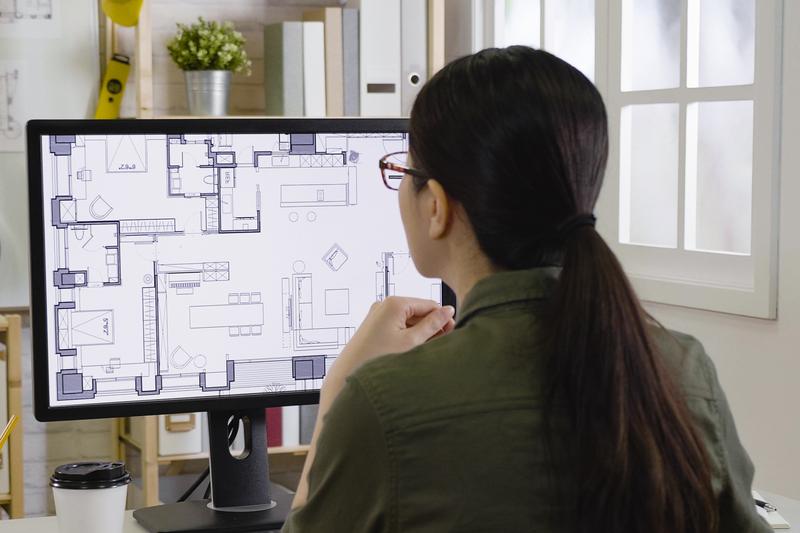
Building Designer vs Architect. What's the difference and which one do you need?
A registered building designer does the same job as an architect on most suburban Melbourne projects. What's different is the training background, the fee, and where each one genuinely earns their place.
Feb 18, 2026 | Rhys Davies
Table of contents
- What is a Building Designer?
- What is an Architect?
- What is a Draftsman?
- The real differences between a Building Designer and an Architect
- Architect vs Draftsman
- Which one do you actually need?
- What does a Building Designer actually do
- Building Designer costs in Melbourne
- Registration. The one thing you shouldn’t compromise on
- Building design in Melbourne
Most people starting a home extension, renovation, or new build in Australia end up asking this question at some point. You know you need someone to draw up plans. You’ve probably heard the terms building designer, architect, and draftsman used interchangeably, and you’re not sure whether the differences matter or whether it’s just a question of price.
The differences do matter but probably not in the way you expect. This isn’t a case where one option is objectively better than the others. It’s a case where each serves a different need, and the right choice depends almost entirely on your project.
What is a Building Designer?
A building designer is a registered design professional who produces the drawings, specifications, and documentation needed to get a residential or commercial building project approved and built. In Victoria, building designers are registered with The Building and Plumbing Commission (BPC) (Formally VBA). That registration is not optional, anyone offering building design services for a fee in Victoria without registration is doing so illegally.
Registration is categorised by the type of work the designer is qualified for. Most residential building designers in Victoria hold registration in what the BPC calls “building design — domestic structures,” which covers houses, extensions, alterations, and the full range of residential work. Some hold additional categories covering commercial or more complex structural work.
To get there, a building designer typically completes a diploma or degree in building design, drafting, or a related discipline, followed by supervised industry experience before applying for registration. The pathway is different from architecture but it’s not a shortcut, it’s a different specialisation with its own technical depth.
What a building designer does day to day is design buildings. They develop concept designs, produce working drawings, specify materials and finishes, navigate the planning permit system, coordinate with building surveyors, and produce the documentation that builders need to price and construct the work. For residential projects like extensions, renovations, new houses, dual occupancy developments, secondary dwellings, a building designer does everything an architect does in terms of the design and documentation service.
What is an Architect?
An architect is a registered design professional whose registration is governed by the Architects Act in each state. In Victoria, registration is through the Architects Registration Board of Victoria (ARBV). Architects typically complete a five-year architecture degree plus a further period of supervised practice before sitting registration examinations.
The title “architect” is legally protected in Australia. Only someone registered with the relevant state board can call themselves an architect or advertise architectural services. This is similar to building designer registration, just under different legislation.
Architects do the same core work as building designers for residential projects — design, documentation, planning, coordination, but their training emphasises design theory, architectural history, and complex building types alongside the technical building knowledge. Architectural education produces designers who are equipped to handle a broader scope: large commercial buildings, institutional projects, complex multi-residential developments, projects with significant heritage or urban design considerations.
For a typical residential project in suburban Melbourne, an extension, a renovation, a new house, a dual occupancy, an architect and a building designer are doing the same job. The architectural education is not a requirement for that work and having it doesn’t automatically produce a better outcome.
What is a Draftsman?
A draftsman (or drafting technician) produces technical drawings but is not a registered design professional. They’re not legally qualified to certify designs for building permits or planning applications. In practice, a draftsman often works under the supervision of a registered building designer or architect, producing the technical drawings that the registered professional then reviews, amends, and certifies.
Some draftsmen operate independently for very minor work, fencing, simple sheds, non-habitable structures, where formal design certification isn’t required. For anything requiring a building permit, you need a registered professional in the chain somewhere.
The “draftsman” market online is a bit murky. Some people advertising draftsman services are actually registered building designers operating under a more approachable job title. Others are genuinely unregistered and working in grey areas. If you’re getting residential design work done and it involves a building permit, which almost everything does, it’s worth confirming the designer’s BPC registration number before you commit.
The real differences between a Building Designer and an Architect
Once you understand the registration structure, the practical differences for a residential project come down to a few things.
Training background
Architects have more formal education, typically five or six years of university study versus a two or three year diploma for a building designer. But the content of that additional training is weighted toward design theory, complex building types, and urban contexts that aren’t especially relevant to a three-bedroom extension in Sunshine or a dual occupancy in Newport. For residential work, both pathways produce practitioners who know what they’re doing if they’ve been doing it long enough.
Fees
Architects generally charge more. How much more varies, some residential architects charge very similarly to experienced building designers, while others operate at a premium that’s substantial. As a rough guide, architect fees for residential projects in Melbourne typically run between 8% and 15% of the construction cost. Building designer fees tend to be lower, either charged as a percentage (often 4%–8%) or as a fixed fee. For a $300,000 extension, that gap can be $15,000–$20,000 or more.
Focus area
Most building designers who work in residential are doing residential work all day, every day. They know the ResCode requirements in detail. They know how Melbourne councils process planning applications. They know which building surveyors are efficient and which are slow. That accumulated local knowledge is worth a lot on a suburban Melbourne project. An architect at a firm that spends most of its time on commercial or high-end residential work may have less of it.
Scope of practice
For very large, complex, or iconic projects like a hospital, a major commercial building, a multi-storey apartment development, you need an architect. Not because of snobbery, but because the structural complexity, the code requirements, and the procurement process require the deeper training that architecture provides. For a house, an extension, a dual occupancy, or a small multi-residential project, a registered building designer is fully qualified to do the job.
Title protection
Only a registered architect can call themselves an architect. A building designer cannot use that title regardless of their skills or experience. This sometimes creates a perception that architects are more qualified simply because of the title, when the reality for residential work is more nuanced.
Architect vs Draftsman
The gap between an architect and a draftsman is more significant than the gap between an architect and a building designer. A draftsman is not registered to certify designs, cannot take professional responsibility for a building permit application, and has no formal design qualification in the way that registration implies. For anything requiring permits or council involvement, an unregistered draftsman operating independently is a risk — both legally and in terms of the quality of documentation a builder will receive.
The comparison people actually mean when they type “architect vs draftsman” is usually “registered design professional vs unregistered person with CAD software.” The answer there is clear: use a registered professional.
Which one do you actually need?
For most residential projects in Melbourne — extensions, renovations, second storey additions, new houses on standard suburban blocks, dual occupancy developments, granny flats — a registered building designer is the right choice for the majority of homeowners. Here’s why.
They’re doing this work every day. A building designer whose whole practice is residential work in Melbourne’s western suburbs has seen hundreds of planning applications, knows the local requirements, and has the practical knowledge that comes from specialisation. That experience is worth more on your project than a broader theoretical education.
The fee difference is real and meaningful. On a $200,000 extension, the difference between a 6% building designer fee and a 12% architect fee is $12,000 before you’ve bought a single material. For most homeowners, that money is better spent on the build itself.
The outcome for a well-designed residential project is not determined by whether the designer holds a diploma or a five-year degree. It’s determined by whether the designer is good at their job, understands your site and your brief, and can produce documentation that a builder can actually price and construct from. Both building designers and architects can hit that standard, or fail to.
When might you genuinely want an architect? If your project involves heritage significance and complex design constraints, if you’re building something architecturally ambitious that you want to enter for design awards, if you’re working on a high-end prestige home where the design process itself is part of the value you’re paying for, or if your project is in a category where architect certification is specifically required by the planning scheme — those are reasonable cases. For a well-executed, practical, permitted residential project in suburban Melbourne, they’re the exception rather than the rule.
What does a Building Designer actually do
People sometimes have a vaguer picture of what the design process looks like than they do of the end result. For a typical extension or new house project with a building designer, it goes roughly like this. It starts with a brief and a site assessment — understanding what you want, what the site allows, what the planning rules require, and whether there are any constraints that need to be addressed upfront. From that comes a concept design: a sketch or early drawing that sets out the layout, the spatial relationships, how the new work connects to what’s there. This is where the design thinking happens, and it’s worth spending time on it — changes at the concept stage cost nothing, changes during documentation cost more, and changes during construction cost the most.
Once the concept is agreed, the designer moves into working drawings: the detailed documentation that defines every element of the building. Dimensions, materials, construction details, joinery, fixtures. This is what gets submitted for planning and building permits, and ultimately what the builder uses to price and construct the job.
Throughout this process, a good building designer is also navigating the approval pathway, advising on whether a planning permit is needed, preparing the planning application and responding to council if required, engaging a building surveyor, and coordinating with engineers where the structural work needs specialist input. By the time you’re ready to get builder quotes, the documentation should be complete enough that you’re getting apples-to-apples pricing from multiple builders rather than rough estimates with large contingencies built in.
Building Designer costs in Melbourne
Building designer fees in Melbourne vary depending on the complexity and scale of the project, and whether the designer charges a percentage of construction cost or a fixed fee.
For a straightforward extension in the $150,000–$300,000 construction range, a fixed-fee building design service including concept design, working drawings, planning permit management, and building permit documentation typically runs between $8,000 and $18,000. Larger or more complex projects — dual occupancy developments, new builds, projects with significant planning complexity — will be higher.
Some designers charge a percentage of the construction cost, typically between 4% and 8% for residential work. On a $250,000 project at 5%, that’s $12,500. On a $500,000 project at the same rate, $25,000. The percentage model aligns the designer’s fee with the scope of the project automatically, but it can make upfront budgeting harder.
What you should be comparing when you get fee proposals is not just the headline number, but what’s included. Does the fee cover planning permit management, or is that an additional service? Does it include liaison with the building surveyor, or do you manage that yourself? Does it include multiple design revisions, or does it charge per revision after the first? A $10,000 proposal that covers the full scope from concept to permit is better value than an $8,000 proposal that adds extras at every stage.
Registration. The One Thing You Shouldn’t Compromise On
Whatever combination of design professional you end up working with: building designer, architect, or someone operating with a draftsman title, the non-negotiable is BPC registration for any work requiring a building permit in Victoria.
Registration is not just a formality. A registered building designer or architect carries professional indemnity insurance, has formally demonstrated competence in building design, and can be held accountable through the BPC if the work falls below standard. An unregistered person offering the same service carries none of those protections, and if something goes wrong, documentation errors that cause construction problems, a permit application that gets rejected, a dispute over the design — you have very limited recourse.
You can verify a building designer’s BPC registration at the BPC website. If someone can’t provide a registration number, that’s your answer.
Building design in Melbourne
For the majority of residential projects in Melbourne, a registered building designer delivers the same outcome as an architect for less money, with the practical day-to-day knowledge that comes from doing this specific type of work in this specific market. That’s not a knock on architects — it’s just an accurate description of what each professional is trained for and what most residential projects actually need.
If you’re trying to decide, the most useful question isn’t “building designer or architect?” It’s “is this person good at residential design, do they know how Melbourne councils work, and are they registered?” If the answers are yes, yes, and yes, the letters after their name matter less than you might think.
Frequently Asked Questions
Does a building designer carry professional indemnity insurance in Victoria?
Yes, and this is one of the practical reasons BPC registration matters beyond just being a legal requirement. Registered building designers in Victoria are required to hold professional indemnity insurance as a condition of their registration. This means that if an error or omission in the design documentation causes a financial loss, for example a planning permit refusal due to a documentation error, a construction problem traced back to an incorrect specification, or a dispute over the scope of work, there is an insured professional who can be held accountable. An unregistered person offering design services carries no such obligation and in many cases holds no insurance at all. If something goes wrong on a project managed by an unregistered designer, your options for recovery are significantly more limited.
Can a building designer represent me at a council planning hearing or VCAT?
A registered building designer can prepare and lodge a planning permit application, respond to council requests for further information, and manage the application through to a decision. If a planning permit is refused and you want to appeal, the appeal goes to the Victorian Civil and Administrative Tribunal, known as VCAT. At VCAT, a building designer can appear as an expert witness on design and planning matters and can assist in preparing the case, but they are not legal representatives. For a contested VCAT hearing, particularly one involving complex planning scheme arguments, many applicants engage a town planner or planning lawyer alongside their building designer. For straightforward residential appeals, a building designer with VCAT experience can be sufficient. The distinction is worth understanding before you assume your designer will handle everything if a permit gets knocked back.
Do building designers work with structural engineers, or is that something I have to organise separately?
A building designer produces the architectural documentation, covering layout, materials, joinery, and the full design intent, but structural engineering is a separate discipline with its own registration requirements. For projects that need structural input, which includes most extensions, second storey additions, and new builds, the building designer coordinates with a structural engineer who designs the footing system, the frame where it's non-standard, any steel or concrete elements, and anything that sits outside conventional residential construction. In practice, a building designer with an established residential practice will have engineers they work with regularly and will manage that coordination as part of the project. You're not expected to source an engineer independently, though you will receive separate invoices for engineering fees, which typically run between $1,500 and $5,000 for a straightforward residential project depending on complexity.
Can a building designer certify their own work, or does someone else need to check it?
A building designer produces and certifies the design documentation, meaning they take professional responsibility for the drawings and specifications. However, the building permit process adds an independent check through a building surveyor, who reviews the documentation against the National Construction Code and relevant standards before issuing the permit. The building surveyor is a separate registered professional, either a council building surveyor or a private one, and they are not part of the building designer's team. Their job is specifically to assess whether the proposed building work complies with the regulations, independently of the person who drew it up. This two-step process, designer certifies, surveyor checks, is how the Victorian building permit system creates an independent review at the documentation stage, before construction starts.
What happens if my building designer makes a mistake that affects my build or permit?
If a documentation error causes a problem, the first step is raising it directly with the designer, who should rectify the documentation at no additional cost if the error is clearly within their scope of work. If the error has caused a financial loss and the designer disputes liability, the professional indemnity insurance they're required to hold as a registered practitioner is what makes recovery possible. Claims against a building designer's insurance are handled through their insurer, and the process can involve the BPC if the matter relates to the standard of professional conduct. The BPC has a complaints and disciplinary process for registered practitioners and can investigate where there is evidence of substandard work. This is why confirming registration before you engage anyone is worth the 30 seconds it takes to check the BPC register. An unregistered designer operating outside the system leaves you with no regulatory avenue and no insured party if things go wrong.
The information provided is for general information purposes only and does not constitute legal, financial, or professional advice. While care has been taken to ensure accuracy, the information may not be complete, current, or applicable to your specific situation. You should always do your own research and, where appropriate, seek advice from a qualified professional before making any decisions based on this information.
Recent Blog Posts

Tell us what you are planning
RD Building Design is a registered building design practice based in Melbourne's western suburbs. We handle design, planning permits, and building permit documentation for extensions, renovations, dual occupancy, new houses, and secondary dwellings. If you want to talk through what a project like yours involves, get in touch.