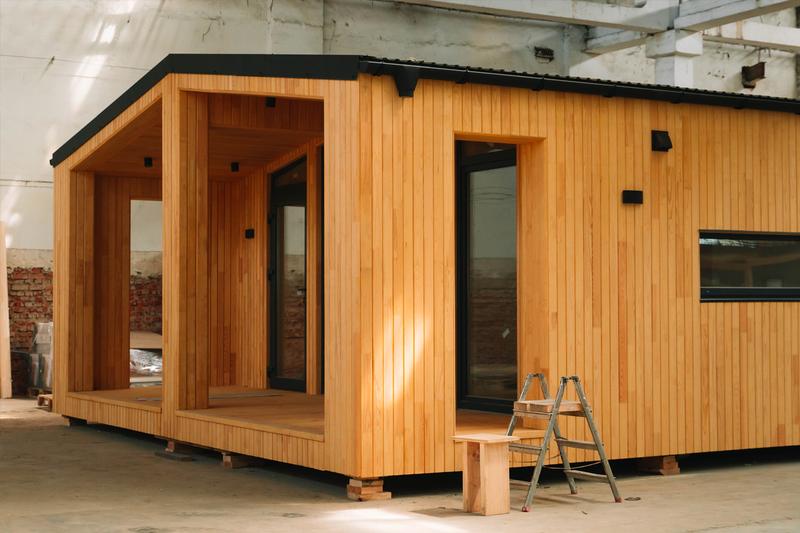
The rise of modular homes in Australia
Modular homes in Australia have been on the verge of going mainstream for the better part of fifteen years. Something has actually shifted recently, and the reasons are less about innovation and more about what's gone wrong with conventional construction.
Dec 13, 2025 | Rhys Davies
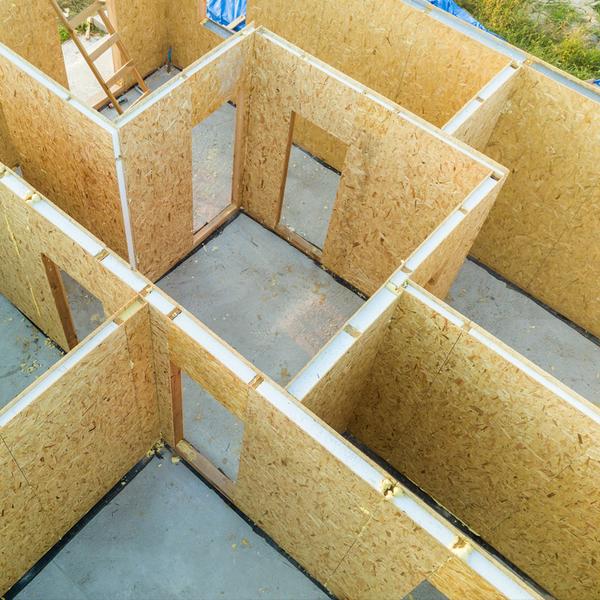
Table of contents
- What we mean when we say modular home
- Why the interest is growing now
- Where kit homes fit and where they don’t
- SIP construction
- Are modular homes good quality?
- Modular homes and the Victorian planning system
- Modular homes under $200,000 in Australia. What’s realistic?
- What this means for Melbourne homeowners
Modular homes have been “about to take off” in Australia for about fifteen years. The trade press has been predicting disruption. Architectural publications have been running photogenic feature projects. Industry conferences have been talking about the industrialisation of construction. And yet, for most of that time, the overwhelming majority of Australian homes were still being built the same way they always were, stick frame or brick, on site, one by one.
Something has shifted. Not a sudden revolution, but a genuine acceleration. The number of people searching for modular homes in Australia has grown significantly over the past few years, and the reasons behind that aren’t hard to find. A construction industry under sustained cost and labour pressure. Building timelines that blew out dramatically through the post-COVID period. A growing awareness that off-site construction methods, done well, can deliver a genuinely better result for certain applications. And a housing affordability problem that has millions of Australians looking for options that don’t involve spending $400,000 on a project home from a volume builder.
What we mean when we say modular home
The terminology is messier than it should be. Modular, prefab, prefabricated, kit home, flat pack, transportable. These words get used interchangeably in marketing, but they describe meaningfully different things. Getting clear on the distinctions matters before you start comparing options.
Modular homes
Modular homes in the truest sense are buildings constructed in factory-built modules, three-dimensional sections of the building that arrive on site in largely finished form and are craned into position and connected together. A modular home might arrive as four or five completed rooms, with wiring and plumbing already roughed in, needing only connection to services, finishing of the joints between modules, and siteworks. This is the approach that companies like Modscape in Australia, and a much larger industry in Europe and the US, have built their business around. It’s genuinely fast and has a predictable quality ceiling, but it’s also expensive at the high end and logistically complex. You need crane access, a prepared site, and a supply chain that can actually deliver the modules.
Prefabricated homes
More broadly this refers to any building where significant components are manufactured off site. This includes modular, but also panel systems, where walls arrive as engineered panels that are assembled on site, and structural systems like SIP construction, which we’ll come back to.
Kit homes
Kit homes are the traditional Australian approach to off-site manufacturing. A kit home supplier pre-cuts all the framing components to length, packages them, and delivers them to site. The assembly still happens on site using conventional construction methods, but the pre-cutting saves time and waste. Kit homes have been available in Australia for over a century, they were how a lot of rural Queensland and outback homesteads were built. The modern version is essentially the same concept with better engineering and more design options.
Transportable homes
Sometimes called ‘Tiny Houses’ are built on a chassis in a factory and can be moved from site to site, the same technology as a caravan or cabin, scaled up. They’re popular in regional areas, on mining sites, and for applications where temporary or relocatable accommodation is needed. They can be placed permanently on a site, but they’re constrained in size and design flexibility by what fits on a truck.
Flat pack buildings
These sit somewhere between kit homes and panel systems. The components are engineered and pre-made, but the assembly process is intended to be simpler and faster than a conventional kit. This is the category where a lot of the smaller backyard building products sit: studios, offices, granny flats.
Understanding which category a product falls into matters because the cost structures, build timelines, quality potential, and planning implications are all different.
Why the interest is growing now
The timing of the modular homes surge in Australia tracks pretty closely with the post-COVID construction crisis. Through 2021 and 2022, conventional builders were facing a toxic combination of supply chain disruption, material cost inflation, and acute trade labour shortages. Projects that had been quoted for 12 months were taking 20. Fixed-price contracts were causing builders to go under. Homeowners were caught in a situation where the builder they’d contracted had gone into administration and their build was half done.
Off-site construction, in this context, started to look a lot more attractive. If the framing, insulation, and internal fitout can happen in a controlled factory environment with salaried workers rather than on-site subcontractors, the project is at least somewhat insulated from the labour market volatility that was hammering conventional builds. That logic isn’t wrong, though it’s worth noting that factory-built construction has its own supply chain vulnerabilities.
At the same time, the housing affordability problem has driven genuine interest in lower-cost delivery methods. The most-searched question in this whole space, modular homes under $200,000 in Australia reflects a very real market need. A significant portion of Australians either can’t access the finance for a $400,000–$600,000 custom build or simply don’t want to spend that on their project. Modular and prefab construction, at certain scales, genuinely can deliver a liveable dwelling for less. The granny flat market has been particularly active here, where the economics of a secondary dwelling make most sense when the build cost is controlled.
The third driver is sustainability and energy performance. As awareness of energy costs has risen and the building code has tightened its minimum energy efficiency requirements, factory-built construction using high-performance panel systems has become more appealing on purely practical grounds. A building that’s precisely engineered, with insulation that’s installed in controlled conditions rather than shoved in by a tradie at the end of a long day, reliably outperforms a site-built equivalent on thermal performance. That translates to lower energy bills and a more comfortable interior without needing elaborate HVAC systems to compensate.
Where kit homes fit and where they don’t
Kit homes in Australia have a search volume that dwarfs most of the other terms in this space. People are looking at them, and for some applications they make a lot of sense. The honest case for kit homes is simplicity and price at the supply end. If you’re building in a regional area, have access to local trades who can do the assembly, and have a straightforward site, a kit home can be a legitimate way to build a decent house for less than a conventional full-service builder would charge. The design ranges have improved substantially in recent years, the days when “kit home” was shorthand for a low-ceilinged, architecturally unremarkable box are not entirely over, but the better suppliers have moved well past that.
The case against kit homes is that the low sticker price on the kit supply doesn’t tell you what the all-up build cost will be. The kit arrives. Then you need a slab, a plumber, an electrician, a carpenter to do the assembly, a plasterer, a painter, and so on through the full list of residential building trades. The project management burden also falls on the owner, unless they’re engaging a builder to manage the assembly, in which case the cost advantage starts shrinking. Kit homes work well for owner-builders with relevant skills and time, or for people building in locations where the conventional builder alternative is prohibitively expensive. For suburban Melbourne, the case is less clear.
SIP construction
Structural insulated panels don’t have the name recognition of modular homes or the search volume of kit homes, but the construction method is genuinely superior for a specific set of applications, and the Australian market has been relatively slow to pick it up compared to parts of Europe and North America.
A SIP panel is an engineered sandwich, two rigid board faces, typically oriented strand board (OSB), bonded to a rigid foam insulation core. The whole panel is structural: it carries loads, it insulates, and it forms the finished surface for cladding on the outside and lining on the inside. A building framed in SIP panels goes up quickly, because the panels are precision-made off site and arrive ready to assemble. More importantly, the thermal envelope of a SIP building is dramatically better than a conventional timber frame with batts insulation.
Timber frame with standard batt insulation has air gaps, thermal bridges at every stud, and installation quality that varies with the care taken on site. SIP panels have none of those problems. The insulation is continuous and integral to the structure. The air tightness of a well-assembled SIP building is close to what European passive house standards require. In practical terms, this means lower heating and cooling costs, a more consistent interior temperature, and a building that performs closer to what its energy rating says it should.
For secondary dwellings, granny flats, backyard studios, smaller residential structures, SIP construction hits a particular sweet spot. The panels can be factory-fabricated to a custom design, delivered to site, and assembled quickly without needing a large construction crew. The result is a structure that outperforms a standard prefab kit on thermal comfort and durability, and can be designed from scratch for the specific site rather than chosen from a range.
This is the construction method behind our Boxed Buildings range. The reason we use SIP rather than a cheaper panel system or conventional framing isn’t novelty, it’s because for a structure that someone’s going to live or work in day to day, the thermal and build quality difference is meaningful and real.
Are modular homes good quality?
This question comes up constantly, and it reflects a genuine uncertainty in the market. The short answer is: it depends entirely on which modular or prefab product you’re looking at.
At the top of the Australian modular market: Modscape, Anchor Homes, and a handful of others, the quality is comparable to or better than a well-run conventional build. Factory construction allows better quality control on the structural elements, more consistent insulation installation, and protection from weather during construction. These aren’t small advantages.
At the bottom of the market the cheapest kit buildings, the most aggressively priced flat pack cabins, the transportable units built to a price point — the quality reflects the price. Thin wall construction, poor thermal performance, low-grade fixtures, and framing that’s adequate but not generous. These products serve a market that genuinely needs cheap structure, and they’re honest about what they are. The problem is when buyers assume that “modular” is a quality guarantee rather than a construction method that spans a huge quality range.
The questions worth asking before buying any modular or prefab product are: what are the wall construction and insulation specifications? What’s the warranty, and who stands behind it if the supplier goes under? What does the all-up cost look like once you include delivery, installation, site preparation, services connections, and any finishing? And critically for Victoria, does the product meet the NCC (National Construction Code) requirements for residential construction, and can it be properly permitted through a building surveyor?
That last point matters more than people realise. Some of the cheaper imported flat pack structures or “shed-spec” buildings being marketed as studios or accommodation don’t meet Australian residential construction standards. They can be built without a permit in some circumstances, but they can’t be lawfully used as habitable accommodation. Buying something that can’t be occupied legally is a problem at resale, at insurance time, and potentially in tenancy situations.
Modular homes and the Victorian planning system
One of the consistent misconceptions about modular and prefab homes in Victoria is that the construction method somehow changes your planning and building permit obligations. It doesn’t.
A modular granny flat, a prefab secondary dwelling, a SIP-built studio, all of these are assessed under the same planning rules and building regulations as a conventionally constructed building. If your site needs a planning permit for a secondary dwelling, the fact that the structure arrives on a truck doesn’t change that. If your design needs to comply with ResCode setbacks, a modular product has to meet those setbacks just like a site-built structure does. The same goes for the building code: a self-contained modular granny flat is a Class 1a building and needs the same facilities as any other dwelling, laundry included.
This catches people out when they buy a modular granny flat from a supplier who either hasn’t told them about the permit requirements, or who operates primarily in states where the rules are different. NSW, for example, has a complying development pathway that allows secondary dwellings on residential land without a full planning permit, subject to size limits. Victoria doesn’t have an equivalent, you’re working through each council’s planning scheme and ResCode requirements regardless of construction method.
The other planning consideration specific to modular structures is site access. A large modular home arriving as three-dimensional modules needs crane access, which means space adjacent to the site, and possibly road closure or lane management. In inner Melbourne suburbs with narrow streets and established trees, this can be a genuine constraint that either limits the size of the modules or adds cost to the delivery.
Modular homes under $200,000 in Australia. What’s realistic?
This is the question driving a lot of the market interest, so it deserves a straight answer.
For smaller structures like a studio, a single-bedroom secondary dwelling, a backyard living space of 30–50sqm, a modular or prefab build under $200,000 all up is achievable on a straightforward site. Some products come in well under that. But “all up” is the key phrase. Supply and installation, slab, services connections, any planning or building permit costs, and site preparation all need to be in that number.
For a full residential home, the classic three or four bedroom house, $200,000 gets you part of the way there. You might find kit home supply packages at that price point, but by the time assembly is done on a suburban Melbourne site, the total cost is typically higher. Volume builders have driven their price points down on standard homes through sheer scale and supplier relationships, and competing with their cost structure on a standard build is genuinely difficult. Where modular and prefab consistently beat conventional construction on cost is in secondary dwellings and smaller residential structures. The relative simplicity of the project, combined with factory efficiency and faster build times that reduce holding costs, can genuinely produce a lower all-up figure than a custom site-built equivalent.
What this means for Melbourne homeowners
If you’re a Melbourne homeowner thinking about a granny flat, a backyard studio, or a secondary dwelling, the modular and prefab market genuinely has things to offer. The speed, the price transparency, and for some products the quality, all compare favourably with the conventional alternative.
But the same rule applies to modular as applies to any residential project: understanding your site’s planning constraints before you commit to any product or design is non-negotiable. The wrong modular product on a site that can’t accommodate it: wrong dimensions, wrong access, wrong permit status, is an expensive mistake. A site assessment that maps out what’s possible before you start looking at products makes everything downstream easier, faster, and cheaper.
The modular homes market in Australia is more mature than it was five years ago, and it’s going to keep growing. The pressure on construction costs isn’t going away. Energy performance requirements are tightening. And the housing shortage is pushing more homeowners to think seriously about what they can build on land they already own. Modular and prefab construction, done properly, is a legitimate answer to all three of those pressures. The key is knowing what you’re buying.
Frequently Asked Questions
Can first home buyers use the First Home Owner Grant for a modular or prefab home in Victoria?
Yes. The Victorian First Home Owner Grant applies to modular and prefabricated homes in the same way it applies to conventionally built new homes, provided the finished structure is fixed to the land, meets the NCC requirements for residential construction, and the contract value falls within the scheme's eligibility limits. The construction method itself is not a barrier. What does matter is how the purchase is structured. A supply-only kit or flat-pack arrangement that isn't treated as a building contract may not qualify, so it's worth confirming with your lender and a mortgage broker before you commit to any particular product or contract structure.
Do modular and prefab homes hold their value in Australia?
The honest answer is that construction method is a much smaller factor in resale value than location, build quality, energy performance, and whether the structure was properly permitted. A well-built SIP or modular home on a good block in Melbourne's western suburbs, with all permits in order and a strong energy rating, will hold its value as well as a conventionally built equivalent. The old stigma around prefab is fading as the category has matured and buyers have become more informed. Where value is genuinely affected is at the bottom of the market, where cheap flat-pack structures with poor thermal specs and no habitation permit create real problems at resale.
How do construction loans work for modular homes in Australia, and are they harder to get?
Construction loans for modular and prefab homes have historically been more complicated than for conventional builds, because lenders traditionally released funds in stages tied to on-site milestones, which doesn't suit a build that's 80% complete before it leaves the factory. That's been changing. As of mid-2025, CommBank introduced updated policies for prefab construction that allow earlier drawdown against factory completion, and other lenders are moving in the same direction. The key is working with a mortgage broker who has experience with off-site construction finance, being clear on whether your contract is supply-only or supply-and-install, and making sure your chosen product sits with a manufacturer your lender will accept.
What energy rating does a modular or SIP home achieve under the NCC in Victoria?
Victoria's current minimum under the NCC is 7 stars NatHERS for new residential construction. A conventionally framed home hitting 7 stars usually requires careful specification of insulation, glazing, and air sealing. A well-assembled SIP building frequently exceeds that threshold without additional effort, because the continuous insulation core and inherent air tightness of the panel system do the heavy lifting by default. In practice, SIP homes regularly achieve 8 or 9 stars, which translates directly to lower heating and cooling bills. For a secondary dwelling or backyard studio that's going to be lived in year-round, that difference is worth more than the energy rating number suggests.
Can a modular or prefab home be built to a BAL rating for bushfire-prone land in Victoria?
Yes, though this question is worth asking early and asking specifically. Modular and prefab homes can be engineered and specified to meet Bushfire Attack Level requirements from BAL-12.5 through to BAL-FZ, but the product needs to have been designed with that intent. Not all modular products are available in bushfire-rated configurations, and some cheaper flat-pack or kit offerings are not suitable for use on land with a BAL designation at all. If your site has a bushfire overlay or is in a designated bushfire-prone area, confirm the BAL rating requirement with your building surveyor before you select any product, and get written confirmation from the supplier that their structure meets the required specification.
The information provided is for general information purposes only and does not constitute legal, financial, or professional advice. While care has been taken to ensure accuracy, the information may not be complete, current, or applicable to your specific situation. You should always do your own research and, where appropriate, seek advice from a qualified professional before making any decisions based on this information.
Recent Blog Posts

Tell us what you are planning
RD Building Design, a registered building designer, works with homeowners across Melbourne's western suburbs on secondary dwellings, backyard structures, and residential design. Our Boxed Buildings range uses SIP panel construction for granny flats, studios, and offices. If you're working out what's possible on your site, a site assessment is the best place to start.