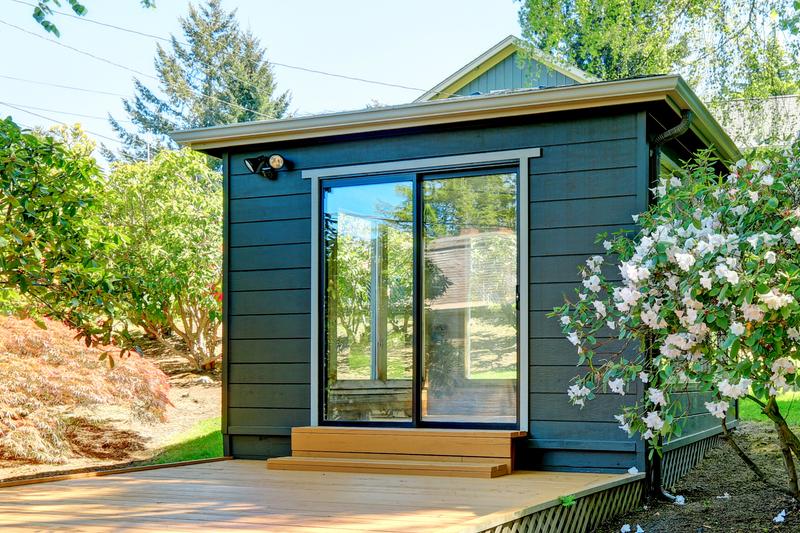
Does a granny flat add value to your property?
What the numbers actually look like for Melbourne homeowners. Rental yield, sale price uplift, tax treatment, and the situations where it goes wrong.
Nov 23, 2025 | Rhys Davies

Table of contents
- How much does a granny flat add to property value?
- The rental income picture
- The tax angle. Depreciation and what it means in practice
- What kills granny flat value, the things that go wrong
- Buying a property that already has a granny flat
- Granny flats vs other property improvements
- When a granny flat makes most sense as an investment
- Granny flats Melbourne
The short answer is yes, a granny flat adds value in most situations. But “most situations” is doing a lot of work in that sentence, and the longer answer is more useful than the short one if you’re about to spend $100,000–$200,000 on a secondary dwelling and you want to understand what you’re actually getting for it.
A granny flat can add value in two distinct ways: it can increase what your property sells for if you decide to sell, and it can generate rental income while you hold it. These are different propositions with different variables and conflating them leads to a lot of confused decisions. A granny flat that delivers strong rental income might add relatively modest value at sale, depending on the buyer pool and what comparable properties without granny flats are selling for. Conversely, a beautifully designed secondary dwelling on a large block in the right suburb might add more to the sale price than it cost to build, even if the rental income was modest.
How much does a granny flat add to property value?
The honest answer is somewhere between nothing and more than it cost to build, and the spread is genuinely that wide depending on the variables.
The research that exists on this question — including work done by CoreLogic and various property economists over the years — suggests that well-designed, permitted secondary dwellings on appropriate blocks in metropolitan Melbourne typically add 20–30% more than the cost of the structure itself in sale price uplift. So a granny flat that cost $150,000 all up might add $180,000–$195,000 to the property’s market value. That’s a reasonable return, though it’s not guaranteed and it’s not uniform across all property types, locations, and buyer markets.
The reasons the number can be higher than the build cost are straightforward. A buyer purchasing a property with an established, permitted granny flat is buying something that would otherwise take them 12–18 months and significant capital to create from scratch. They’re also buying the certainty that comes with a structure that’s already been through the planning and building permit process. They pay a premium for that, particularly in a market where construction costs and timelines have been volatile.
The reasons the number can be lower than the build cost are also straightforward. Not every buyer wants a secondary dwelling. Some buyers are purchasing for their own occupation and see a granny flat as a complication — a structure that takes up yard space they’d prefer to have, or one that comes with landlording obligations they didn’t ask for. If the buyer pool for your property type and suburb skews toward owner-occupiers rather than investors or multi-generational families, the uplift from a granny flat is lower.
The location matters enormously. In Melbourne’s western suburbs — Kingsville, Spotswood, Wyndham, Werribee, Deer park — the combination of strong rental demand, multi-generational household structures, and relatively high proportions of investor and dual-income buyers means granny flats tend to be well-received in the market. In some inner-city suburbs where blocks are small and buyers are primarily young professionals wanting private outdoor space, the calculus can be different.
The rental income picture
For most homeowners who build a granny flat in Melbourne, rental income is the primary financial motivation — and in the right circumstances it’s a compelling one.
A well-located, well-designed one-bedroom or studio granny flat in Melbourne’s western suburbs currently achieves $270–$380 per week in the rental market, depending on size, quality, and location. At $320 per week, that’s $16,640 per year in gross rental income before expenses. Against a total build investment of $140,000, that’s a gross yield of around 11.9%.
To put that in context: the gross rental yield on a typical Melbourne investment property purchase in 2025 is around 3–4%. The yield on a granny flat investment — where you’re only paying for the structure on land you already own — is structurally much higher, because you’re not funding the land component that makes conventional investment property yields so compressed.
The ongoing expenses are real but manageable. Property management if you use an agent (typically 7–10% of rent), landlord insurance, maintenance, and the proportion of council rates and insurance attributable to the secondary dwelling. Net yield after these costs typically sits in the 8–10% range, which compares very favourably to almost any alternative use of $140,000.
And importantly, in Victoria you can rent your granny flat to anyone — it doesn’t have to be a family member. There’s no restriction on offering it to the broader rental market. Some homeowners prefer a known tenant; others list it on the general rental market. Either is legal.
The tax angle. Depreciation and what it means in practice
This is where a lot of homeowners leave money on the table simply because they don’t know what’s available. If you’re renting out a granny flat, you’re entitled to claim depreciation on the structure and its fixtures as a tax deduction — the same way an investor would depreciate a rental property.
A new granny flat typically has depreciable value in the structure itself (at a 2.5% per year straight-line rate over 40 years) and in the plant and equipment — hot water system, air conditioning, carpet, appliances — which depreciate at higher rates over shorter effective lives. On a $140,000 structure with reasonable fit-out, a quantity surveyor’s depreciation schedule might identify $6,000–$9,000 per year in deductible depreciation for the first several years.
Combined with the ability to deduct interest on any finance used to build the structure, plus the direct costs of managing and maintaining it, the after-tax return on a granny flat rental is often significantly better than the pre-tax numbers suggest. This is worth sitting down with an accountant to model properly for your situation — but the point is that the tax treatment of a rental granny flat is genuinely favourable and materially improves the numbers.
What kills granny flat value, the things that go wrong
If a granny flat adds value in most situations, it definitely doesn’t in some — and understanding those situations is as useful as understanding the upside.
An unpermitted structure
This is the single biggest value killer. A granny flat built without a building permit or built in a way that doesn’t match what was permitted, creates a documented problem that will surface at sale. Conveyancers check permits. Buyers’ solicitors check permits. Banks’ valuers check permits. An unpermitted structure can result in a lender refusing to include it in the valuation, a buyer requiring it to be demolished or legalised before settlement, or a negotiated price reduction that exceeds what it would have cost to do it properly in the first place. There’s no upside to skipping the permit process. The cost savings are real but temporary; the liability is permanent.
Poor design that compromises the main house
This can actively reduce the combined property value. A granny flat that’s positioned in a way that eliminates all natural light from the main house’s living areas, blocks the principal bedroom’s access to the backyard, or creates an awkward shared access arrangement that neither the main house nor the secondary dwelling benefits from — these design failures make the property harder to sell rather than easier. The design of the secondary dwelling needs to be considered in the context of the whole site, not as an independent structure dropped wherever it fits.
A granny flat on a block that’s too small
This can leave buyers unconvinced. If the site is tight enough that the total coverage looks dense, outdoor space for both dwellings feels inadequate, or privacy between the two structures seems compromised, the market response is usually muted. In an outer suburban context where buyers expect some garden, a granny flat that consumes the whole backyard has a harder time generating a value premium at sale.
A structure that’s purely functional but not well finished
This tends to underperform in the rental market relative to its potential and captures less of the sale price uplift too. The fit-out standard of the secondary dwelling — kitchenette, bathroom, flooring, lighting — doesn’t need to be extravagant, but it needs to be genuinely liveable and not obviously the cheapest possible spec. Tenants who have options will choose comfort, and buyers who are evaluating a property partly on rental income potential will factor in how long the existing standard will remain rentable without investment.
Buying a property that already has a granny flat
If you’re on the buying side of this question, evaluating a property that already has a secondary dwelling — the key due diligence points are worth knowing.
Check the permit status. Request the building permit documents from the vendor’s section 32 or ask your solicitor to request them specifically. You want to see a building permit and an occupancy certificate for the secondary dwelling. If either is absent, treat the structure as unpermitted until proven otherwise, and factor in what it would cost to regularise it — or whether it can be regularised at all.
Get a proper assessment of the rental income potential if that’s part of your purchase rationale. Real estate agents will provide an estimate, but an independent property manager’s opinion of achievable rent is worth more and costs very little to obtain.
Consider whether the property has been valued with the granny flat in the valuation. Sometimes it has been, sometimes it hasn’t. Your lender’s valuer makes that determination, and the outcome affects how much you can borrow against the property.
Granny flats vs other property improvements
Homeowners comparing a granny flat against other ways to spend the same money often find the comparison instructive.
A kitchen renovation at $40,000–$80,000 adds value, but it’s largely invisible to buyers who would have replaced it to their own taste anyway. A bathroom renovation at $20,000–$40,000 similarly adds less than it costs in most cases — it improves saleability and time on market more than price. Extensions and second storey additions improve liveability and add genuine value, but they’re pure capital expenditure with no income generation during the hold period.
A granny flat is unusual among residential property improvements because it both adds to the property’s sale value and generates income while you own it. The combination of yield plus capital uplift is the reason the economics work as well as they do — you’re not just betting on the sale price, you’re being paid while you wait.
The closest comparison is subdivision, which converts one property into two and produces the most dramatic value creation — but it requires a larger block, a more complex planning process, higher upfront costs, and a willingness to either sell one of the resulting lots or hold two separately rated properties. For most homeowners who have the block for it, a granny flat is simpler and still financially compelling.
When a granny flat makes most sense as an investment
The granny flat decision works best when a few things line up:
Your block has the space to accommodate a secondary dwelling without compromising the main house’s amenity — ideally a total site area of 500sqm or more, though well-designed solutions on smaller blocks are possible. Your suburb has genuine rental demand from tenants who want self-contained secondary accommodation — which describes most of Melbourne’s western suburbs. You’re planning to hold the property for long enough that the rental income and the appreciation in the combined property value have time to compound. And you’re approaching it properly — getting the site assessment done first, designing the secondary dwelling as part of the overall site rather than in isolation, and going through the right permit process.
None of this is complicated, but it does need to be thought through in the right order. Starting with the site constraints — what your block actually allows, what size and position is feasible, whether a planning permit is needed — tells you what kind of granny flat is possible before you start comparing products or getting quotes. Getting that wrong early in the process is how people end up with a structure that either can’t be permitted or doesn’t do what they hoped for financially.
Granny flats Melbourne
A granny flat adds value in most circumstances for Melbourne homeowners who have the right block and do it properly. The rental income case is strong and consistent. The sale price uplift case is real but depends on location, design quality, permit status, and the buyer pool for that property type. The tax treatment during the hold period is genuinely favourable. And compared to most other residential property improvements, the combination of income generation and capital value creation makes the granny flat one of the stronger financial decisions available to a homeowner with a suitable block.
The word “suitable” carries a lot of weight there. Not every block works and understanding what yours allows before you commit to anything is the right starting point. That’s what a proper site assessment delivers, a clear picture of what’s possible, what it’s likely to cost, and whether the numbers work for your situation.
Frequently Asked Questions
Does renting out a granny flat affect the main home's capital gains tax exemption in Victoria?
Yes, and this is one of the most consistently overlooked financial implications of renting a granny flat. In Australia, your principal place of residence is generally exempt from capital gains tax when you sell. When part of that property is used to generate rental income — which a tenanted granny flat clearly is — the ATO's position is that a proportionate part of the property loses its full main residence exemption. The proportion is typically calculated based on the floor area of the granny flat relative to the total property, and on the number of years it was rented. For a granny flat that represents 20% of the total floor area and has been rented for five of the ten years you owned the property, roughly 10% of any capital gain on sale may be assessable. This isn't a reason not to rent — the rental income and yield advantages remain compelling — but it's a reason to model the full after-tax position with an accountant before you commit, particularly if you're close to retirement or planning to sell in the short to medium term.
What type of insurance does a rented granny flat require, and is it different from standard home insurance?
A rented granny flat requires landlord insurance rather than standard home and contents insurance, and the distinction matters. Standard home insurance typically excludes loss or damage caused by tenants, loss of rent following an insured event, and liability claims arising from a tenancy. Landlord insurance covers these things, and for a secondary dwelling being rented on the general market, it's the appropriate product. Some landlord insurance policies are written specifically for standalone secondary dwellings rather than the main home, so if your existing home insurer offers landlord cover, confirm the policy wording covers a separate dwelling on the same title rather than just rooms within the main house. The cost is generally modest — $800 to $1,500 per year for a secondary dwelling depending on the insurer and the sum insured — and should be factored into your net yield calculation alongside management fees and maintenance.
How does a bank or lender value a property that has a granny flat when assessing borrowing capacity?
Lenders treat granny flats inconsistently, and understanding the variability matters if you're buying a property with one already in place or refinancing after building one. Some lenders will include the full value of a permitted secondary dwelling in their valuation and allow a portion of the rental income to be counted toward your borrowing capacity, which improves the lending position. Others assess the property on comparable sales only, without attributing specific value to the secondary dwelling, which can produce a lower-than-expected valuation. The permit status of the structure is the key variable. A granny flat with a building permit and occupancy certificate has a clear path to being included in a formal valuation. An unpermitted structure is typically excluded entirely, and some lenders will discount the overall valuation to reflect the risk of required demolition or rectification. If rental income from the granny flat is part of your borrowing story, confirm with your broker which lenders will count it and on what terms before you commit to a purchase or a construction cost.
Does a granny flat trigger land tax in Victoria?
Land tax in Victoria is assessed on the total unimproved value of land you own, excluding your principal place of residence. Building a granny flat doesn't change the land value calculation directly, because land tax is based on the land itself rather than the improvements on it. However, if you're renting the granny flat, the ATO and the State Revenue Office treat that as a partial commercial use of the property. For land tax specifically, the principal place of residence exemption in Victoria applies to the whole property including a granny flat, provided the main dwelling remains your principal residence. If you move out of the main house but continue to rent the granny flat, the exemption position changes and land tax may apply to the whole site. The rules around mixed-use principal residences are specific enough that a conversation with a tax adviser or the SRO directly is worth having if your ownership or occupation arrangements are anything other than straightforward.
Can you legalise an existing unpermitted granny flat in Victoria, and what does it involve?
Sometimes, and the process is more involved than most people expect. Legalising a structure that was built without a permit — sometimes called regularisation — requires a registered building surveyor to assess the existing structure against the National Construction Code requirements that applied at the time of construction, and issue a building permit and subsequent occupancy certificate if the structure complies or can be brought into compliance. The complications arise when the structure doesn't meet current setback requirements, doesn't have adequate insulation, or has plumbing and electrical work that can't be inspected or certified without being opened up. In some cases, rectification work is straightforward and the cost is manageable. In others, the gap between what was built and what the code requires is wide enough that demolition is cheaper than compliance. The starting point is engaging a private building surveyor to do a preliminary assessment before you commit to a purchase price that assumes the structure can be legalised. Getting that assessment done before you exchange contracts, not after, is how you avoid inheriting a problem that's considerably more expensive to solve than you expected.
The information provided is for general information purposes only and does not constitute legal, financial, or professional advice. While care has been taken to ensure accuracy, the information may not be complete, current, or applicable to your specific situation. You should always do your own research and, where appropriate, seek advice from a qualified professional before making any decisions based on this information.
Recent Blog Posts

Tell us what you are planning
RD Building Design, a registered building designer, provides site assessments and design services for secondary dwellings across Melbourne's western suburbs. If you're trying to work out whether a granny flat makes sense on your block, financially and physically, that's exactly what we can help you figure out.