Owner Builder in Victoria
The BPC requirements, the insurance obligations, the honest savings calculation, and why you still need a building designer.
Sep 21, 2025 | Rhys Davies
Table of contents
- What owner builder actually means in Victoria
- The BPC requirements
- What you can and cannot do yourself
- The insurance and warranty obligations
- The honest savings calculation
- What you still need regardless
- When owner building makes sense
- How a building designer works with owner builders
Most people who start researching owner building in Victoria are doing it for one reason: they think it will save them money. And it might. But the decision is more complicated than the savings calculation suggests, and a lot of people go in without understanding the obligations they are taking on, not just during the build, but for years afterwards.
What owner builder actually means in Victoria
An owner builder in Victoria is someone who takes on the role of the builder for a domestic building project on land they own and intend to occupy. You are not hiring a registered builder to manage the construction. You become legally responsible for coordinating the work, managing subcontractors, meeting building regulations, and ensuring everything is done to code.
The Building and Plumbing Commission (BPC) regulates owner builders, and you can only act as an owner builder once every five years. The permit is tied to a specific property, and the project must be residential domestic building work valued at more than $16,000.
What owner building is not: it is not a way to build without plans or permits. You still need working drawings, a building permit, building surveyor inspections, and an occupancy permit at the end. The drawings and permit process are identical whether you are using a registered builder or managing the project yourself. BPC requirements
Before you can apply for an owner builder permit, you need to complete an approved owner builder course. The course covers your legal obligations, workplace health and safety, and the basics of managing a building project. It takes a few days and costs a few hundred dollars. Once you have completed it, you apply through the BPC’s online portal and pay the application fee.
You will also need a white card, the construction induction card that anyone working on a building site in Australia is required to hold. If you do not already have one, you will need to get it before work begins.
The BPC owner builder permit itself takes a few weeks to process once your application is complete. With that in hand, you can then apply to your building surveyor for a building permit, which is the actual authorisation to start construction.
| Requirement | Detail |
|---|---|
| Owner builder course | Approved course covering legal obligations, WHS, and project management |
| White card | Construction induction card required for anyone on a building site |
| BPC permit application | Lodged through the BPC online portal after course completion |
| Processing time | Typically a few weeks once the application is complete |
| Frequency limit | Once every five years, tied to a specific property |
| Minimum project value | Domestic building work over $16,000 |
What you can and cannot do yourself
Owner building does not mean doing all the physical work yourself. Most owner builders hire licensed tradespeople for plumbing, electrical, roofing, and structural work, and some do a portion of other work themselves where the building regulations allow it.
What you are doing is project managing. You are responsible for scheduling trades in the right sequence, ensuring each subcontractor is licensed and their work is inspected at the right stages, keeping the site safe and legally compliant, managing variations and budget when things do not go to plan, and liaising with your building surveyor at mandatory inspection stages.
This is a significant time commitment. People underestimate how much coordination a building project requires: dealing with trades that do not show, materials that arrive late, inspections that reveal issues, and the general unpredictability of construction. If you are working full time, managing this alongside a job is genuinely hard.
The insurance and warranty obligations
This is where owner building gets complicated in Victoria, and it is the part most people do not fully understand until they try to sell the property later.
Owner builders in Victoria are required to take out domestic building insurance (also called owner builder warranty insurance) for projects over $16,000 before work begins. This insurance covers future owners of the property against defects in the building work, currently six years for major defects and two years for other defects.
When you sell a property within six and a half years of completing owner builder work, you are required to provide the buyer with a copy of the owner builder inspection report from a registered building inspector, and the domestic building insurance must be in place. Without both of these, a buyer can walk away from the contract.
Owner builder warranty insurance is more expensive and harder to obtain than the insurance a registered builder takes out through their warranty insurance scheme. Premiums depend on the value of the work and can be substantial. Some insurers will not cover certain types of construction at all.
The resale implication is real and worth thinking about before you start. If you build and sell within six years, prospective buyers and their banks will scrutinise owner builder work more closely than work done by a registered builder. Valuations can be affected, and some lenders are reluctant to finance purchases of properties with recent owner builder work.
| Obligation | Detail |
|---|---|
| Domestic building insurance | Required before work begins on projects over $16,000 |
| Major defect warranty period | Six years from completion |
| Other defects warranty period | Two years from completion |
| Resale trigger | Applies if you sell within six and a half years of completion |
| Owner builder inspection report | Must be provided to buyer on request when selling within six and a half years |
| Insurance availability | More limited and more expensive than registered builder warranty insurance |
The honest savings calculation
The appeal of owner building is usually quoted as saving 20 to 30 percent compared to using a registered builder. That figure exists, but it deserves some scrutiny.
The savings come from not paying a builder’s margin on the overall project. A registered builder typically charges 20 to 25 percent above the cost of labour and materials to manage the project, carry the insurance, and take on the legal responsibility. If you do all of that yourself, you theoretically keep that margin.
The reality is messier. Owner builders often pay more for trades than registered builders do, because builders have ongoing relationships with subcontractors and buy materials in volume. As a one-off client managing a single project, you will generally pay retail rates. You will also make mistakes, and some of those mistakes cost money to fix.
Add the cost of the owner builder course, permit fees, higher insurance premiums, your own time, and the potential impact on resale value, and the net saving is usually smaller than the headline figure suggests. For some people it is still worth it. For others the calculation does not stack up.
What you still need regardless
Here is the part that often surprises people researching owner building for the first time: becoming your own builder does not mean you can skip the design and approval process.
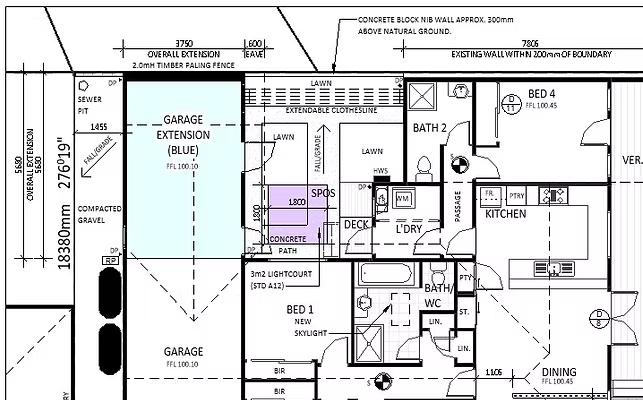
You still need working drawings prepared by a building designer or architect. These are the detailed, dimensioned plans that your building surveyor uses to issue the building permit. They need to comply with the National Construction Code, your local planning scheme, and any overlays or covenants on your property. A set of plans sketched at home will not get you a permit.
You still need a planning permit if your project requires one. Whether you are the builder or not has no bearing on whether a planning permit is needed. Dual occupancy, heritage overlays, design and development overlays: these all trigger planning requirements regardless of who manages the construction.
You still need a building surveyor to issue the building permit and carry out mandatory inspections at each stage of construction. And you need an occupancy permit at the end, issued by your building surveyor once the project is complete and all inspections are signed off.
What this means practically is that engaging a building designer early is as important for an owner builder as it is for someone using a registered builder. Good working drawings that are well-coordinated and clearly detailed make the permit process faster and give your trades a reliable set of instructions to work from. Owner builders who cut corners on documentation tend to have more problems on site, not fewer.
When owner building makes sense
Owner building genuinely suits some people. If you have a background in the construction industry, even in a trade adjacent to building, the project management side is much less daunting because you understand the sequencing and you know who to call. If you have more time than money and are building somewhere your own labour genuinely offsets the lack of trade contacts, the savings can be real.
It also suits people who are building something unconventional or on a tight budget where no registered builder will take the project on at a price that works. Owner building gives you control that you simply do not have when you are working within a builder’s contract and timeline.
Where it tends not to work well is for people who are time-poor, unfamiliar with how construction actually runs, building on a complex site or under tight council constraints, or planning to sell within a few years of completion.
How a building designer works with owner builders
At RDBD, we work with owner builders. The design and approval process is the same as any other project: we prepare the plans, coordinate with your building surveyor, and handle any planning permit applications the project needs. The difference is that once the building permit is issued, you are managing the construction rather than handing over to a builder.
Some of our owner builder clients want us involved through construction as well, reviewing what is being built against the drawings and catching discrepancies early. Others prefer to manage independently once they have their approved plans in hand. Both work.
If you are considering going owner builder and you are still in the research phase, a site assessment is a good starting point. Understanding what your property allows, what planning requirements apply, and roughly what a compliant set of drawings would involve gives you a realistic picture of the whole project before you commit to anything.
Frequently Asked Questions
Can an owner builder in Victoria hire licensed tradespeople, or do they have to do the work themselves?
An owner builder in Victoria is not required to do any of the physical construction work personally. The role is about legal responsibility for the project, not about swinging a hammer. Most owner builders hire licensed tradespeople for all the regulated trade work, including plumbing, electrical, roofing, and structural carpentry, and some do portions of non-licensed work themselves where building regulations permit it. What you cannot do is have unlicensed people perform licensed trade work on the project. A registered plumber must do the plumbing. A registered electrician must do the electrical. The building surveyor will inspect the work at mandatory stages and will require evidence that licensed trades were used for regulated work. The owner builder's job is to coordinate the sequence of trades, manage the site, liaise with the building surveyor at inspection stages, and keep the project compliant. That project management role is the substance of what you are taking on.
How often can you apply for an owner builder permit in Victoria, and does it transfer if you sell the property?
The BPC limits owner builder permits to one every five years, and the permit is tied to a specific property that you own and intend to occupy. You cannot use an owner builder permit on an investment property you do not intend to live in, and you cannot obtain a second permit within five years of being issued the first, regardless of whether the first project is complete. The permit does not transfer with the property if you sell. What does transfer is the liability. If you sell within six and a half years of completing owner builder work, the buyer has the right to request an owner builder inspection report from a registered building inspector, and you are required to have domestic building insurance in place. Both conditions must be met before a sale can proceed. The five-year rule exists partly to prevent owner builder permits from being used as a mechanism to avoid builder registration requirements on a commercial basis.
What is the owner builder inspection report in Victoria and when is it required?
The owner builder inspection report is a written assessment of the completed building work prepared by a registered building inspector, typically an independent building consultant with the relevant qualifications. It documents the condition of the building work, identifies any defects, and assesses whether the construction meets the required standards. In Victoria, this report is required when an owner builder sells a property within six and a half years of completing the owner builder work. The buyer is entitled to request it, and the vendor is required to provide it along with evidence that domestic building insurance is in place. The report is commissioned and paid for by the owner builder, not the buyer. Some buyers will request the report before making an offer; others will make the contract conditional on a satisfactory report. If the report identifies significant defects, the buyer can use it to renegotiate the price or withdraw from the contract depending on how the special conditions are drafted.
Does an owner builder in Victoria need to comply with ResCode and the planning scheme in the same way a registered builder does?
Yes, completely. The owner builder permit changes who manages the construction. It does not change what is allowed to be built or where. Your working drawings must comply with the National Construction Code, your local planning scheme, ResCode setback and site coverage requirements, and any overlays or covenants on the title. Your building surveyor will assess the plans against those standards before issuing the building permit, and will inspect the work at mandatory stages to confirm construction matches the approved drawings. If your project triggers a planning permit requirement, which dual occupancy, heritage overlays, and certain other projects do, you need that planning permit before the building permit can be issued, regardless of whether you are building as an owner builder or through a registered builder. Council does not treat owner builder applications differently from registered builder applications in the planning assessment process.
Can an owner builder in Victoria use the same building designer as anyone else, and what does that process look like?
Yes. The design and documentation process for an owner builder project is identical to any other residential project. A registered building designer prepares the concept design and working drawings, coordinates any structural engineering required, and manages the planning permit application if one is needed. The building designer certifies the drawings, the building surveyor reviews them and issues the building permit, and then construction begins under the owner builder permit rather than a builder's contract. Some owner builders also engage their building designer to review construction progress during the build, to catch discrepancies between what is being built and what the drawings specify before they become expensive problems. Others prefer to manage construction independently once they have their approved plans. Both approaches are workable. What does not work is proceeding without a full set of professionally prepared working drawings. Sketch plans or builder-sketched layouts will not satisfy a building surveyor, and owner builders who try to shortcut the documentation stage tend to encounter more problems during construction, not fewer.
The information provided is for general information purposes only and does not constitute legal, financial, or professional advice. While care has been taken to ensure accuracy, the information may not be complete, current, or applicable to your specific situation. You should always do your own research and, where appropriate, seek advice from a qualified professional before making any decisions based on this information.
Recent Blog Posts

Tell us what you are planning
RD Building Design, a registered building designer, prepares plans and manages permits for owner builder projects across Melbourne's western suburbs. If you are working out whether owner building suits your project and what the design and approval process involves, a site assessment is a practical starting point.